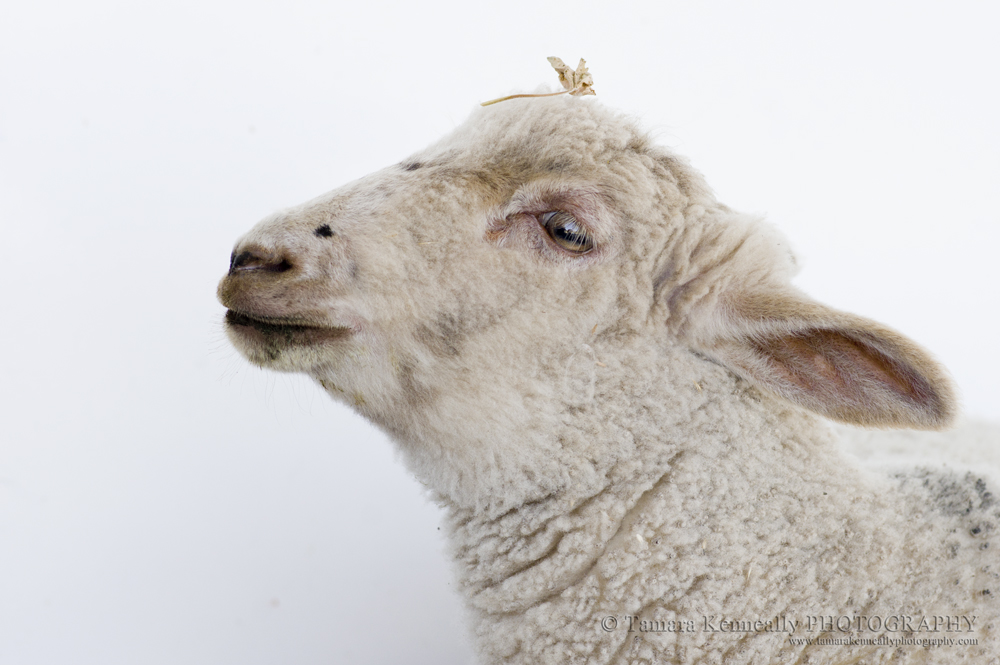
Wrinkles

The farmer looked at me, Jim Beam and Coke in hand, and smirked whilst he said, “Yeah, the rest was butchered this morning'”. As he said this, there was a chill in the air. I looked at the little lamb eating tiny strands of brown grass he was trying to find amongst the junk yard of this man’s so called “farm”. This lamb who had escaped the “butchering” was tiny. Way too small for a three month  old lamb. I asked why he was so small and got a shrug in response. I later found out that because this little lamb had been orphaned, he had to be bottle fed. Instead of spending money on formula to feed this lamb for four months, they weaned him before two months old. This would have affected his growth at such a young age. This sweet little lamb was so friendly. He walked up to me and sniffed my face. I somehow had to get him out of there and take him home. The only future for him at this dilapidated farm was death. I put the job of talking the farmer around to J. After half an hour of talking to this farmer, J looked at me and nodded his head. We bundled this little boy into the car as quick as lightning.
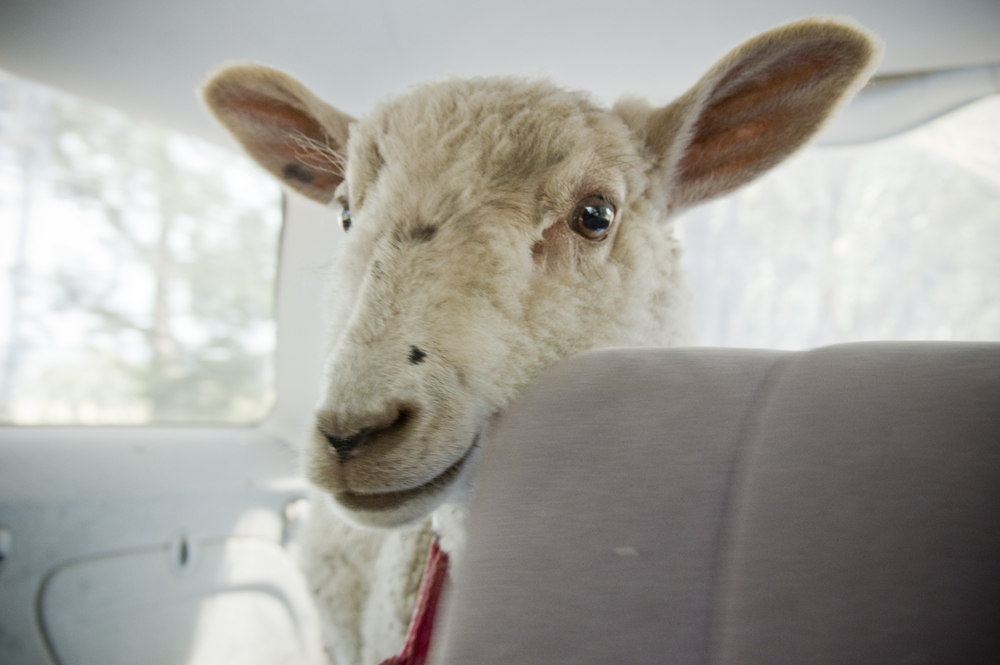
1web
On his way to his new home.

He was covered in in his poo, was full of worms, had had his tail docked by the use of a band and also had a band around his testicles, which is a standard method of castration in Australia.

These are the standard methods of lamb castration in this country:

“1-Surgical removal of the testicles involves cutting off the bottom one-third of the scrotum with a sharp sterilised lamb-marking knife. The testicles are then exposed (by squeezing the remaining portion of the scrotum with the thumb and index finger) and removed with a clamp or hook on the end of the knife.

2-The elastrator method involves the use of a rubber ring, which is expanded using a pair of special pliers and placed over the scrotum just above the testicles. The ring blocks blood circulation, causing the scrotum and testicles to eventually wither and fall off. It induces the same effect when placed on the tail.”

Both methods are done without any pain relief of any kind. If these castrating and tail docking methods were applied to dogs and cats in this country, there would be an outcry of animal cruelty. Just because they are farm animals, it does not mean they do not feel pain.
16web

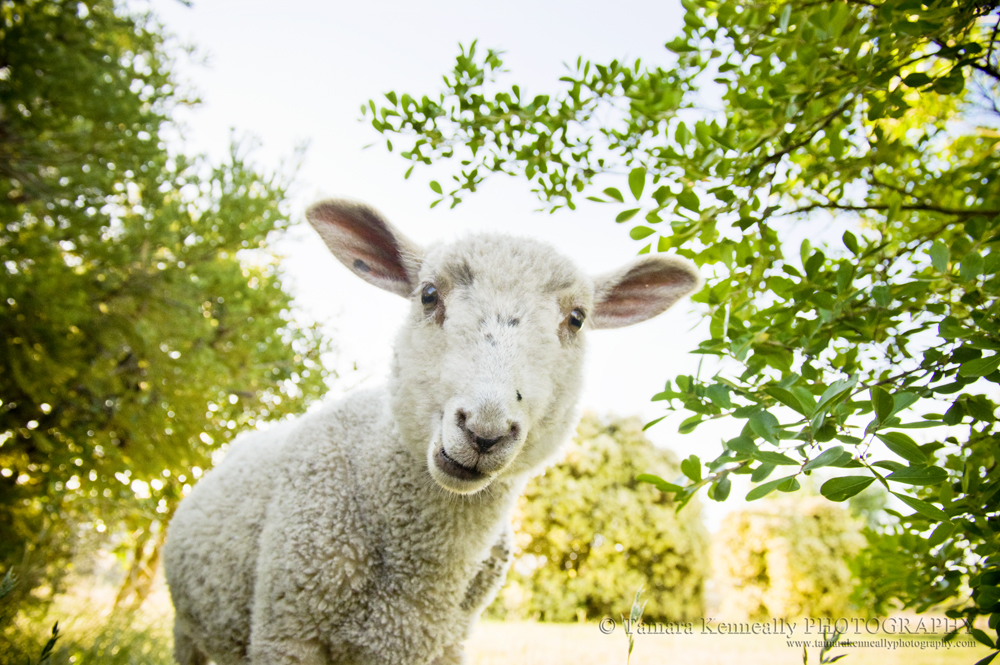
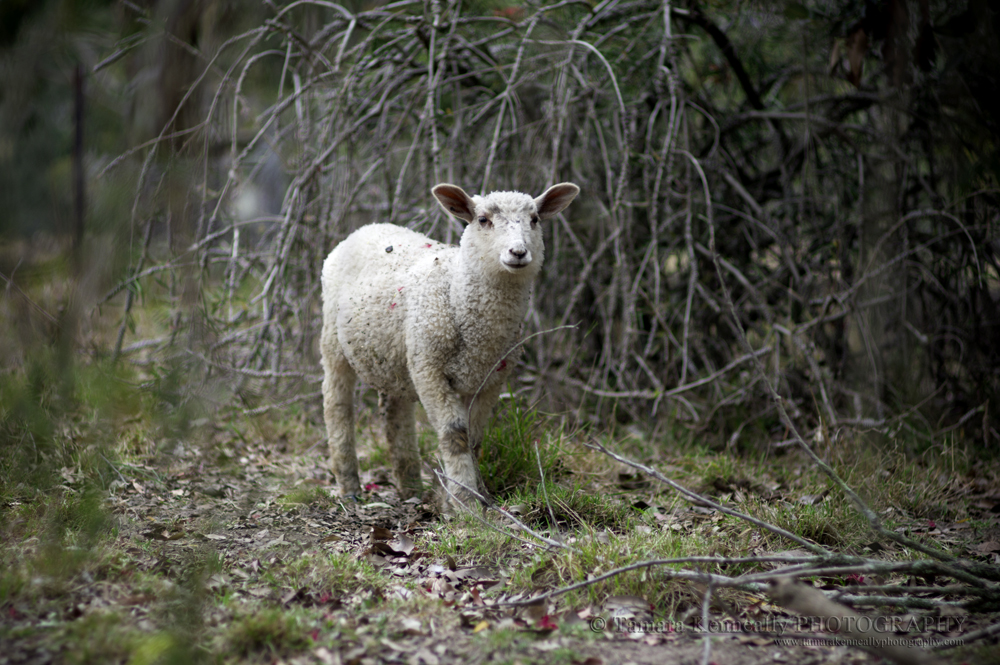
We got him home and he was named “Wrinkles”. He was quite sickly, so he lived in the house paddock for two to three weeks whilst we treated him. He was castrated at the vets with anaesthetic and antibiotics administered. He slept at the back door mat at nights and followed us around like a dog during the days. Wrinkles is one of the sweetest lambs we have ever encountered. His nature is very similar to our Lefty’s who we miss dearly. He loves people and absolutely adores being patted. He became incredibly spoilt living in the house paddock with us and had J wrapped around his little finger.
8web
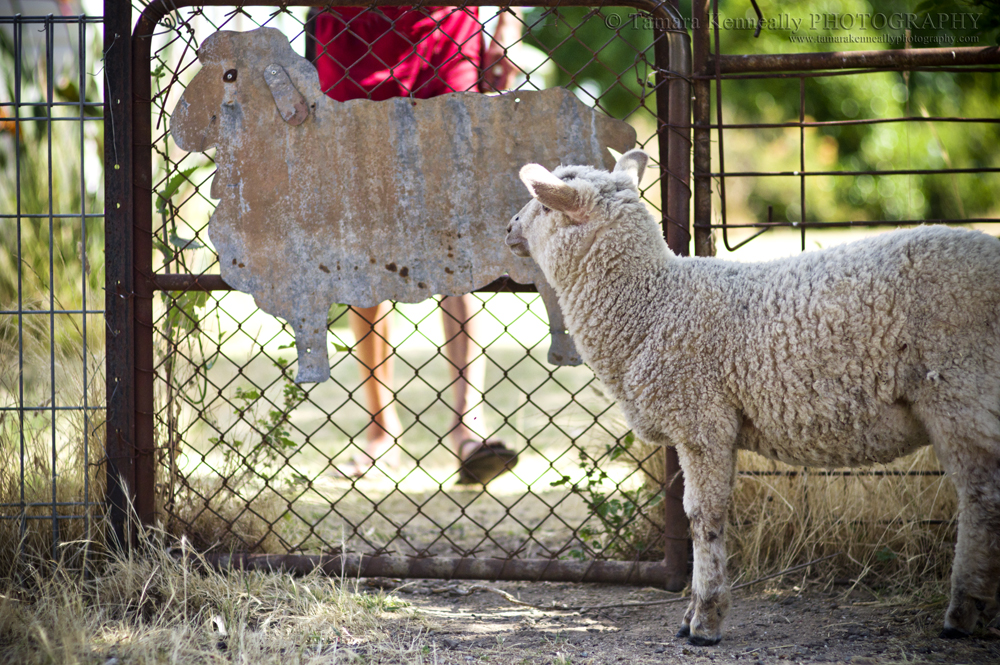
Wrinkles would baa for the gate to be opened and J would come running.

The day arrived where it was time for him to join the flock. His first night out with the other sheep he baa-ed and cried all night long. Limpy gave him quite a hard time and bullied him for the first week or so until Righty stepped in (as father figures often do) and took charge of the situation. Wrinkles now follows Righty everywhere. He sleeps next to Righty. Grazes next to Righty and learns important sheep lessons from Righty.
11web

He’ll never be a big sheep, but he will be a sheep who gets to live out his life, unlike so many others who are eaten every single day.
Please don’t use my images without permission. All images are Copyright Tamara Kenneally

______________________________________________________________________________________________________________________________________

WRINKLES

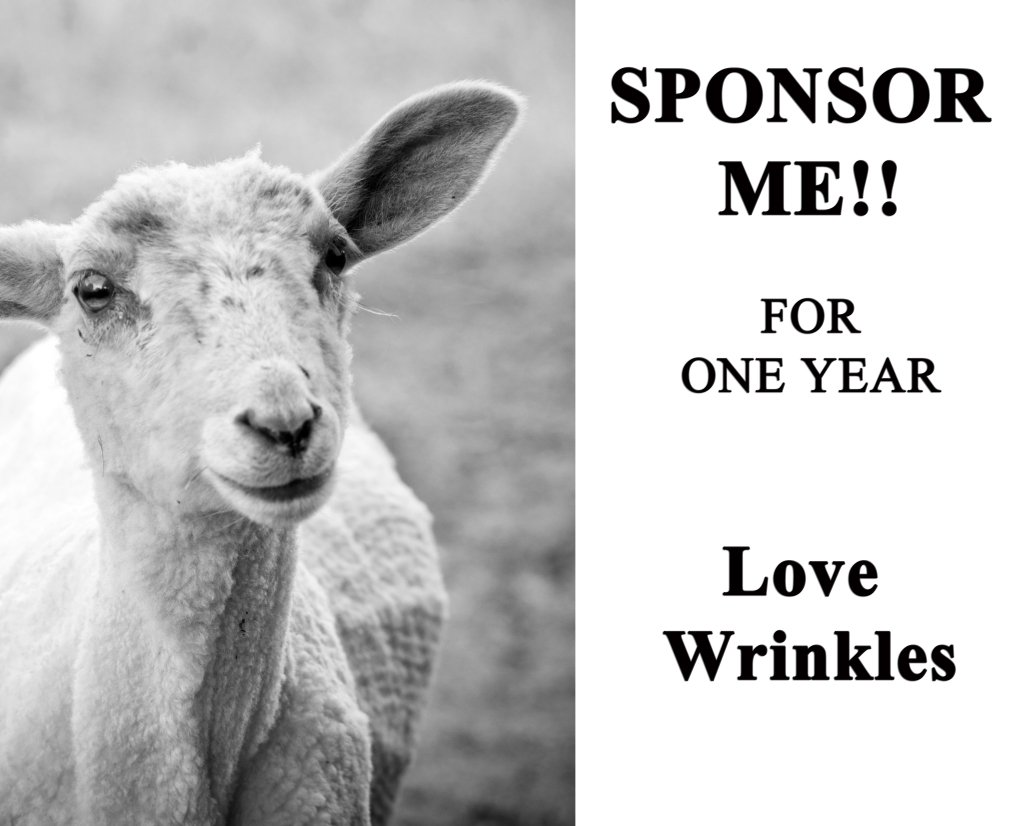
A one year $50 sponsorship helps keep Wrinkles healthy and happy.

It ensures Wrinkles has the things he loves every single day! Things like sheep nuts, Vita Weats, mineral licks and lots of extra food to help his little body grow!

YOUR ONE YEAR SPONSORSHIP ENTITLES YOU TO:

*One sponsorship certificate.

*Three 5×7 inch prints of Wrinkles being the most adorable sheep in the world.

*An email from Wrinkles during the year letting you know what he’s been up to.

CLICK ON THE PHOTO BELOW TO SPONSOR WRINKLES!
wrinkles1

Circe

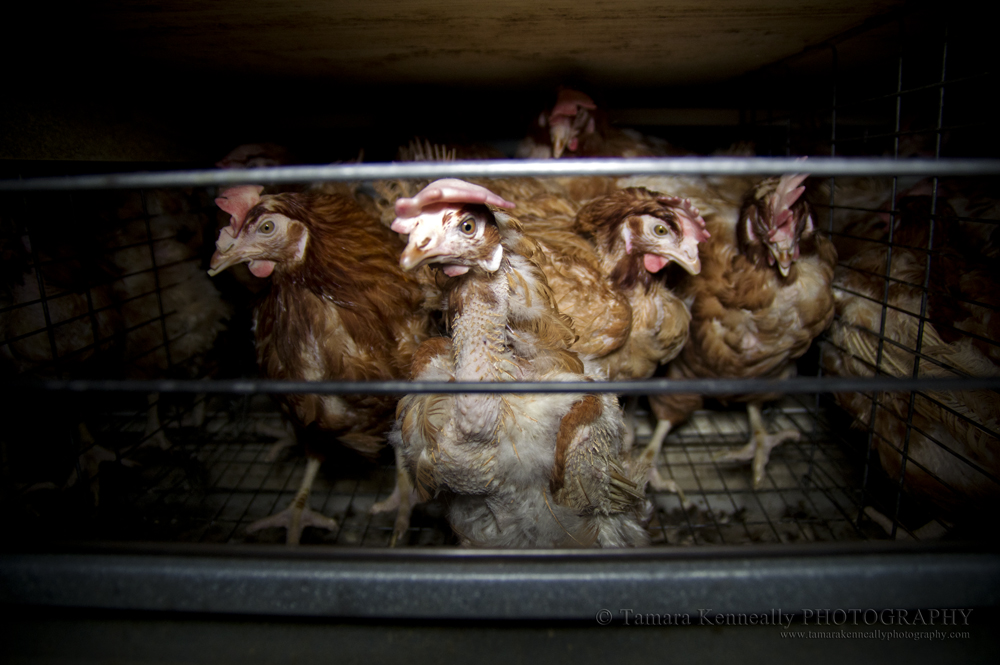
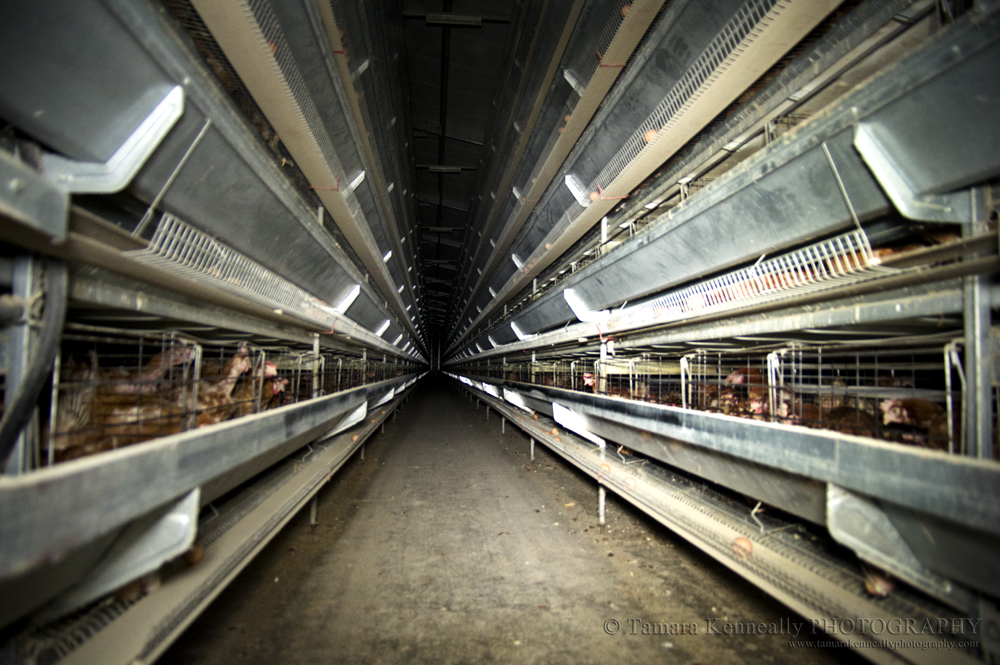
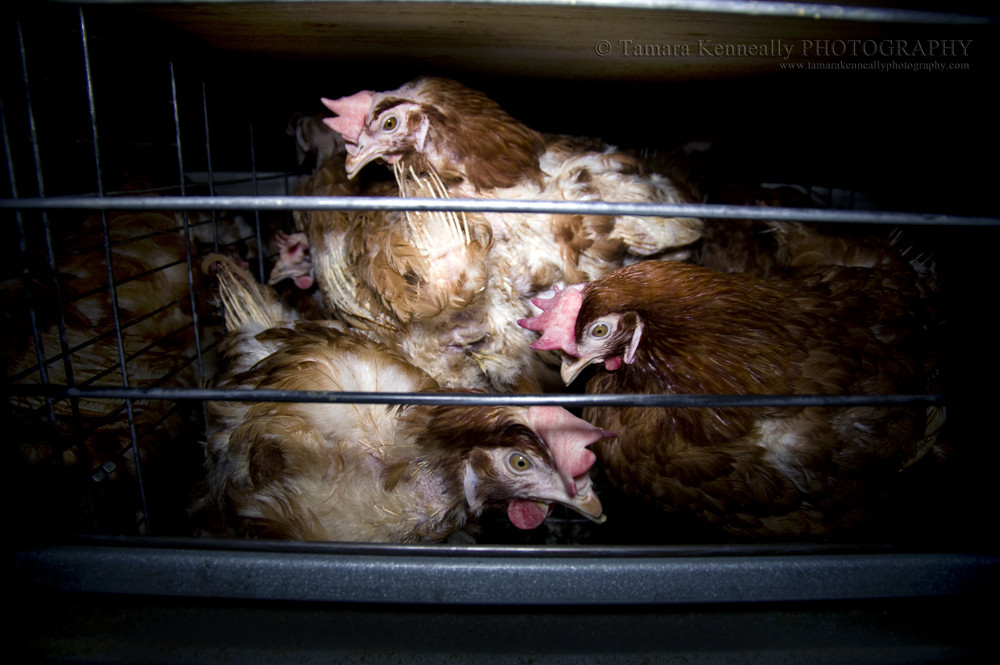
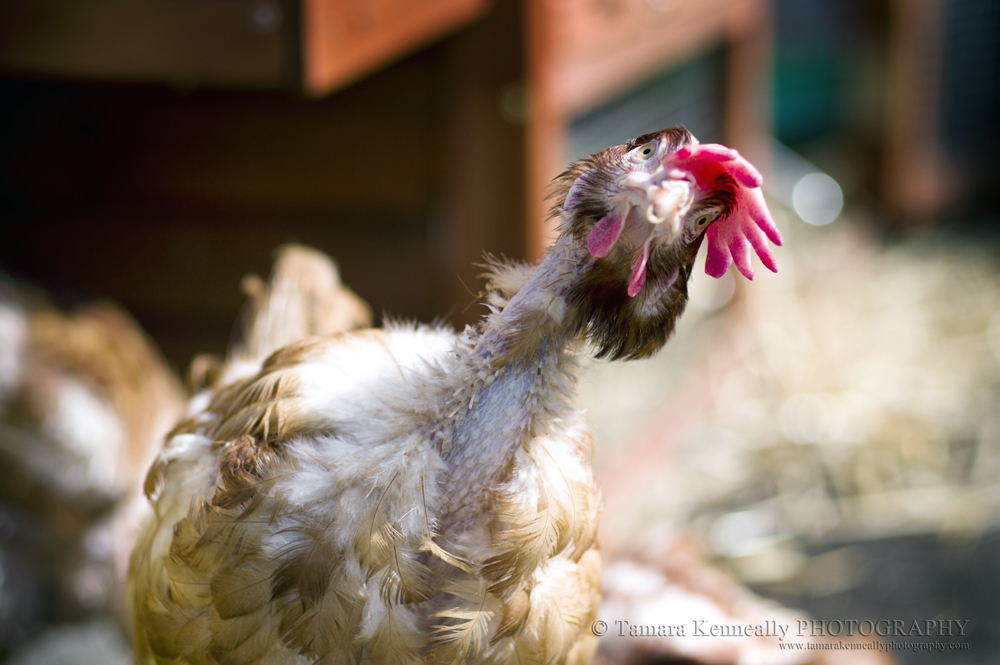
In Greek mythology, Circe was a goddess of magic. She was known to turn her enemies, or those who offended her, into animals. Circe was angry and a little bit crazy, but was incredibly strong and powerful. Circe the hen is equally as angry and crazy, but for very different reasons. I can imagine Circe wishing she had the power to change those farm workers into hens and force them to live in cages as they walked up and down her cage aisle.

6WEB

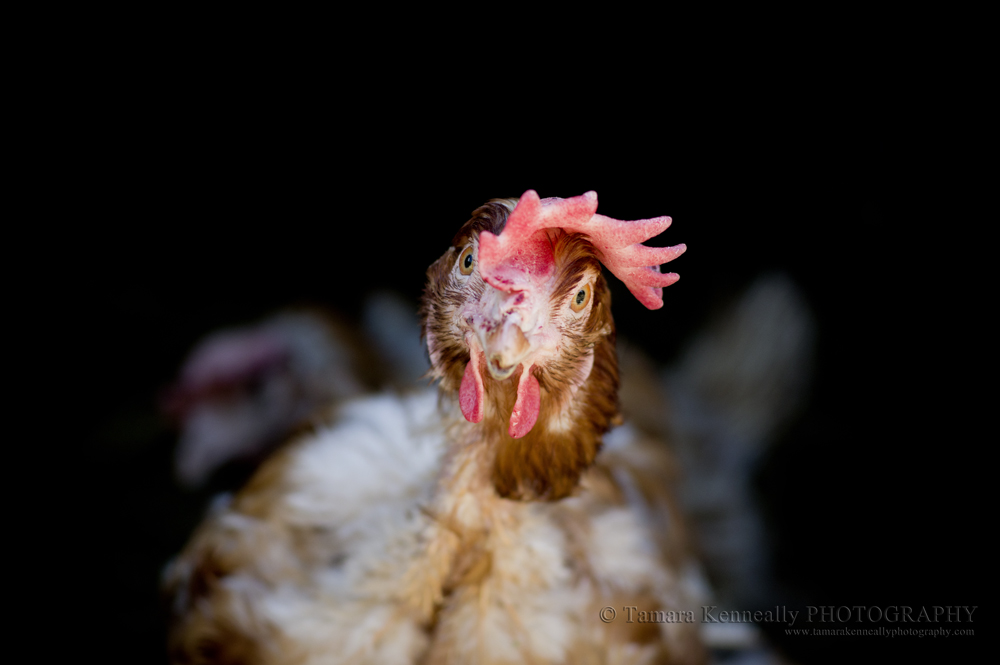
She is the hen right at the front in this image below. She stood up to me in that cage whilst I was taking these photos and looked me right in the eye as if to say “Don’t you dare touch me”, but behind that challenge was a glint of “Please help me”…..and so we did.

7web

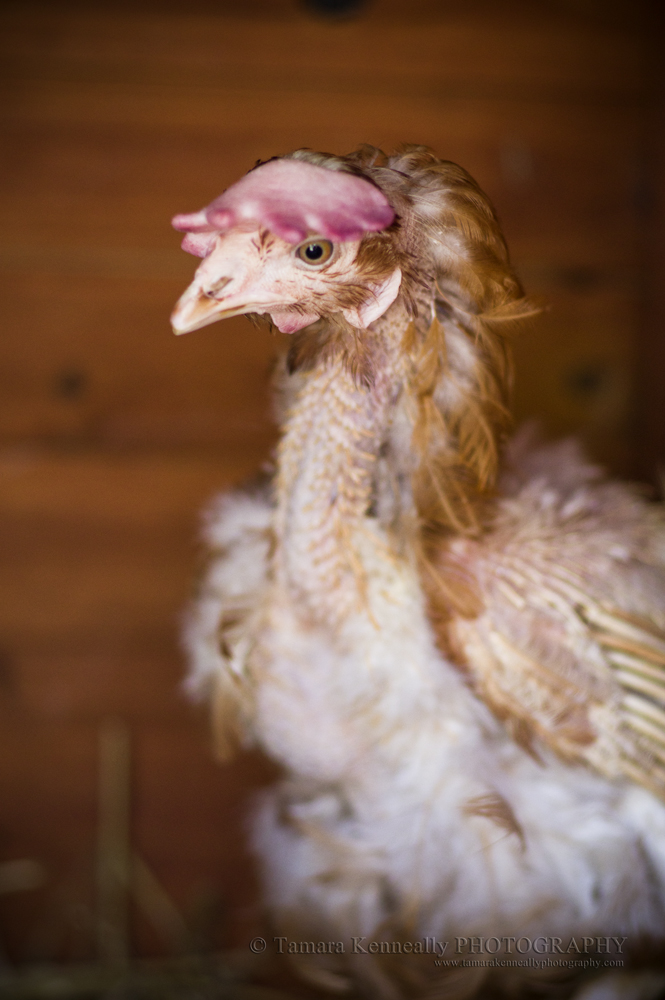
As soon as Circe first got to experience a straw bed, she was hooked. She loves her straw bed so much and still spends a far bit of her day in it.. She is becoming less angry as time goes on, but she needs more time to get a grasp on her new life. Circe pretends to be so tough, but deep down, she is so scared of the big, wide world and everything that’s in it.

3web

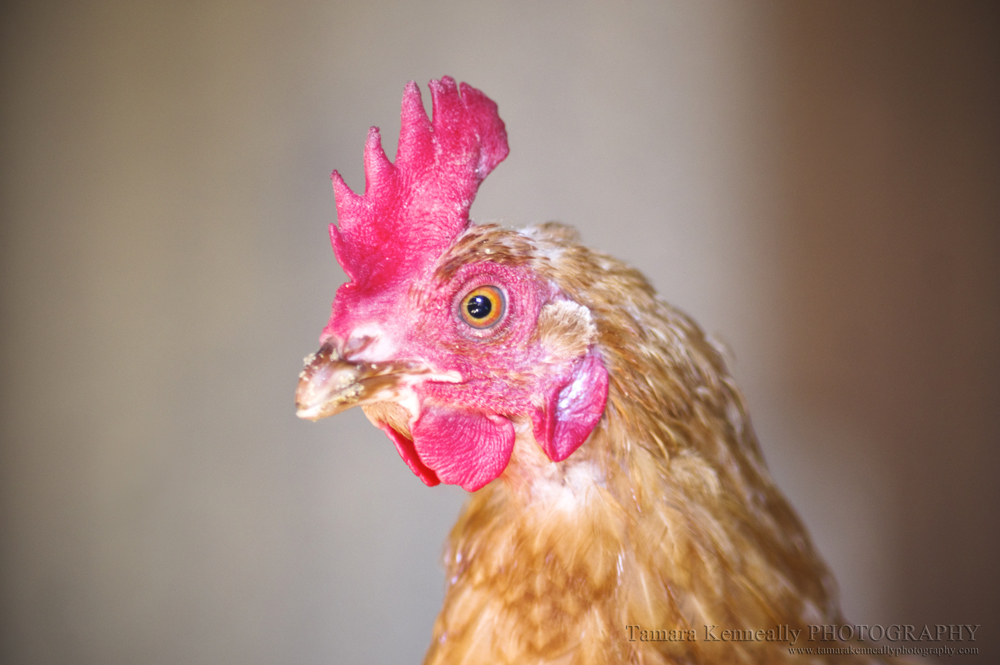
I am hoping that with time her anger turns to confidence and her fear turns to power and that the whole world becomes magical for her.

______________________________________________________________________________________________
Circe sadly left this world in May, 2016. This is the tribute I wrote for her:
Circe.
The first time I saw her she was skinny and pale, but she stood up the front of that cage like she was saying “ok, take me on”. The last time I saw her she was in her little straw bed, tucked up inside, barely conscious and leaving the world. I told her she could go, but gosh she hung on. I tried all my tricks to let her live longer, because she loved living so very much, but it was her time and she died whilst asleep. I found her gone with her head tucked in under her wing.
Circe was so brave. Such a brave little hen. She put on such a tough show, always running around with her tiny chest puffed out telling all the other chickens what to do. Under all that bravado was a sweet, shy little chicken.
Those first few weeks out of the cage, she refused to come out of her straw bed. She was so scared of the world, but my gosh, how she loved that straw bed. She’d sit there all day picking up pieces of straw and burying herself as deep as possible in her beloved straw. Her little eyes were always so wide with joy and she’d chirp in glee as she saw another piece of straw to add to her bed. I’m so glad I had the chance to let her die in a straw bed like she loved so much instead of her dying in that cage or dying at the abattoir.
Chickens break my heart over and over again and sometimes (no ALL the time), when I am digging those holes to bury them, I wonder how I am supposed to go through this again and again and why did I choose this……and then I turn around and see all my beautiful free girls just enjoying being chickens and fitting 1000 exciting chicken things in to just one day and I know I am doing the right thing. I’m doing the right thing.
It was a pleasure to know you my brave, tough Circe.

5web

Please don’t use my images without permission. All images are Copyright Tamara Kenneally

Templeton, Fern And Charlotte

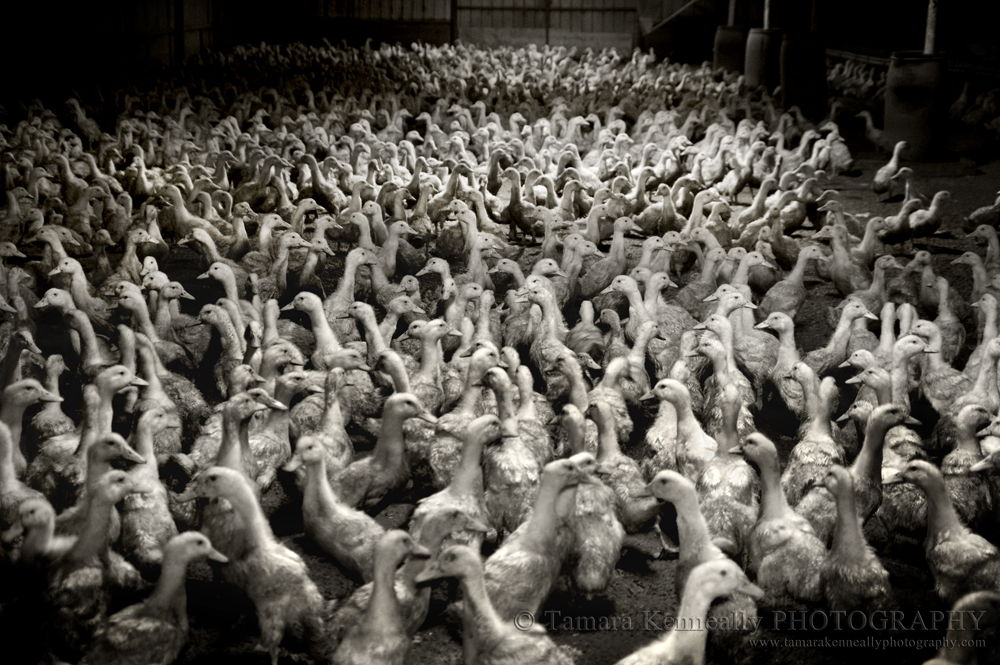
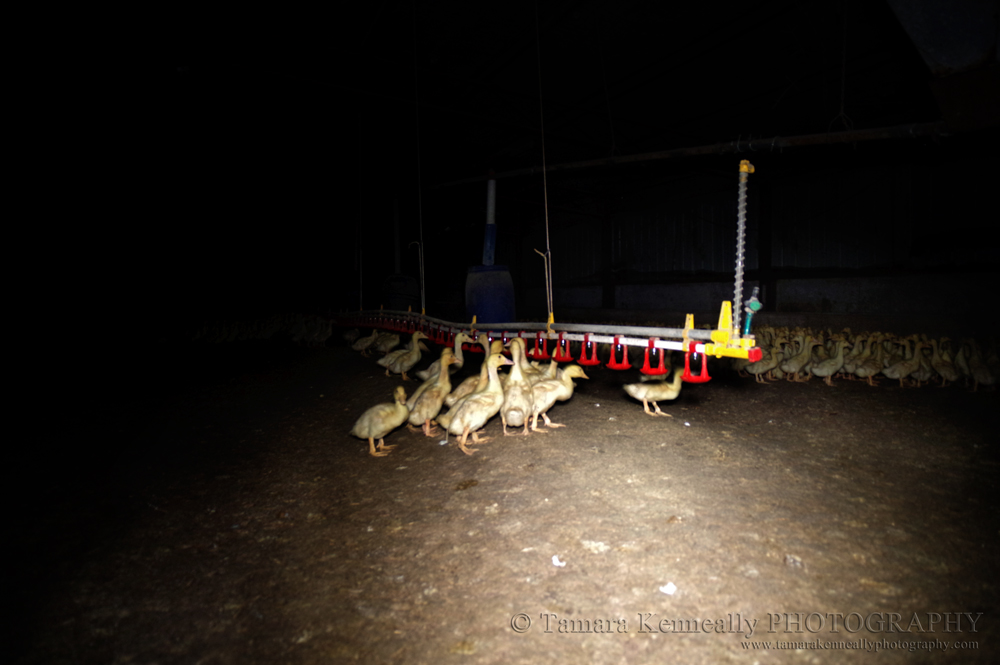
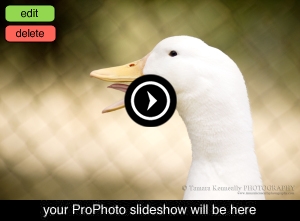
The moon was full that night as we walked up the embankment towards the farm. Eight, huge sheds stood looming in the moonlight as we walked on to the property. This was a duck farm. Pekin ducks were crammed into these sheds. They lived on a floor covered with manure inches thick. They were never given access to the outside or given access to pools of water to bathe in.

1web

Ducks are intensively farmed in sheds and are selectively bred to grow as fast as possible in the smallest amount of time possible. Sheds are not cleaned out until the ducks are sent to slaughter, which is nine weeks from hatching to slaughter weight. Anyone who knows ducks is aware that their waste matter is much more than a chicken’s and the sheds fill up incredibly quickly with duck manure on the floor of the sheds. Ducks walk, live and sleep on manure caked floors that can be more than half a metre thick. The Australian duck industry slaughters over 8 million ducks for their meat annually and the industry is worth approximately $100 million a year. The Australian Poultry Cooperative Research Centre reports that duck meat production has been increasing at the rate of over five percent per year. Most duck farms in Australia house roughly 50,000 ducks in one farm, but there are certain larger farms that house between 50,000 – 100,000 ducks at any one time.

4web

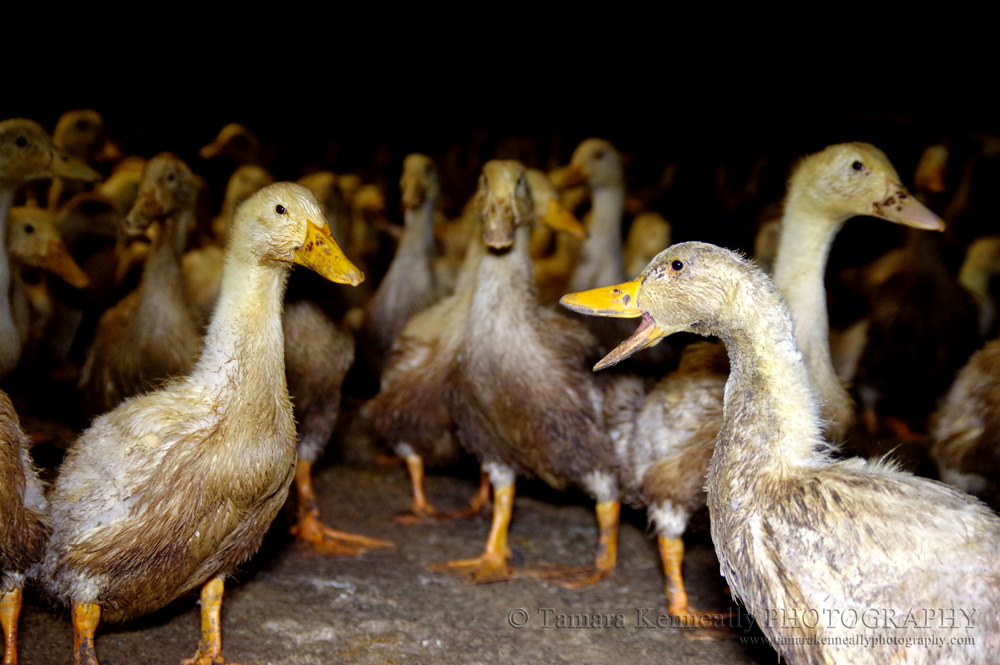
The first shed I walked into was full of ducks of about 6 weeks old. They were large and completely covered in their own manure. At first they ran from me in terror. I crouched down and waited. In about ten minutes time, thousands of beautiful Pekin ducks started to walk up to me and surround me. Some just stared at me, some talked to me, but they were all there to greet me. These beautiful, inquisitive birds (covered in duck poo) gave me their their trust and my heart broke to know that in three weeks time they’d all be sent to slaughter.

11web

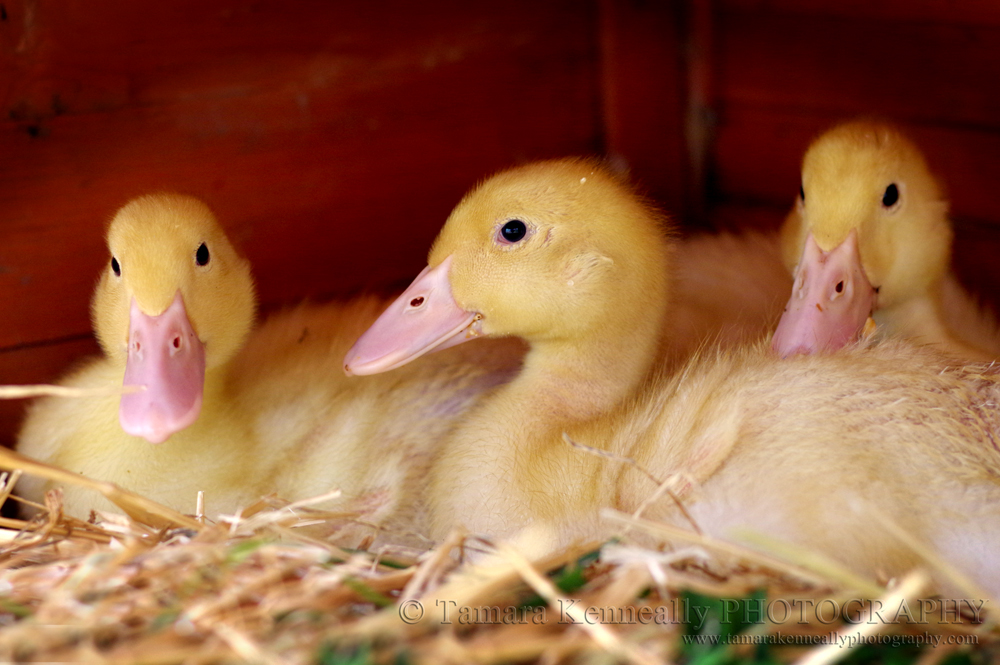
I walked out of that shed with a heavy heart and went on to the next lot of sheds. In one shed were thousands of 2-3 weeks old ducklings. They were incredibly big for their age and absolutely terrified. I couldn’t get near them with my light on, so I walked over to a small huddle of ducklings with my light off and scooped three up with me to take home. They were covered in duck poo and so scared. I took them back to the car through the moonlight lit paddock away from that duck farm, away from that manure filled hell those poor ducks lived in.

12web

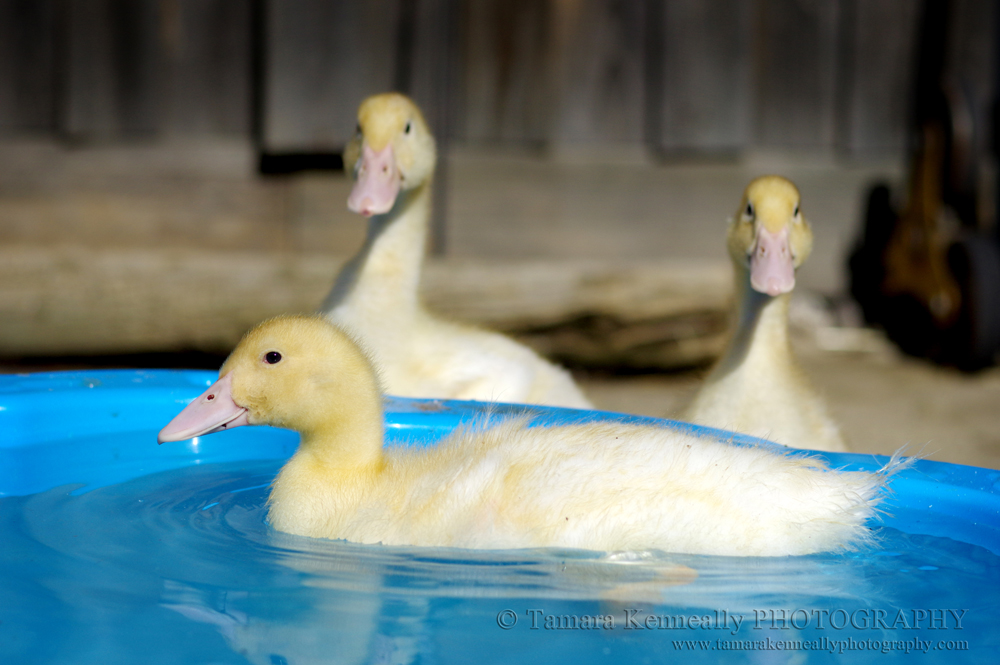
The next morning they starting chirping in terror when the sun came up. They’d never seen the sky or light so bright and they had no mother to comfort them, so they were incredibly stressed out. I let them out and showed them their pool of water and suddenly their little faces lit up with recognition and joy. They finally figured out how to get into the pool and from then on that’s where they stay. Today they still spend all day in their pools.

5web

Factory farming denies all animals of a mother’s love. Chickens and ducks are hatched without a mother, sows are confined so they cannot clean or comfort their piglets in any way.

1web

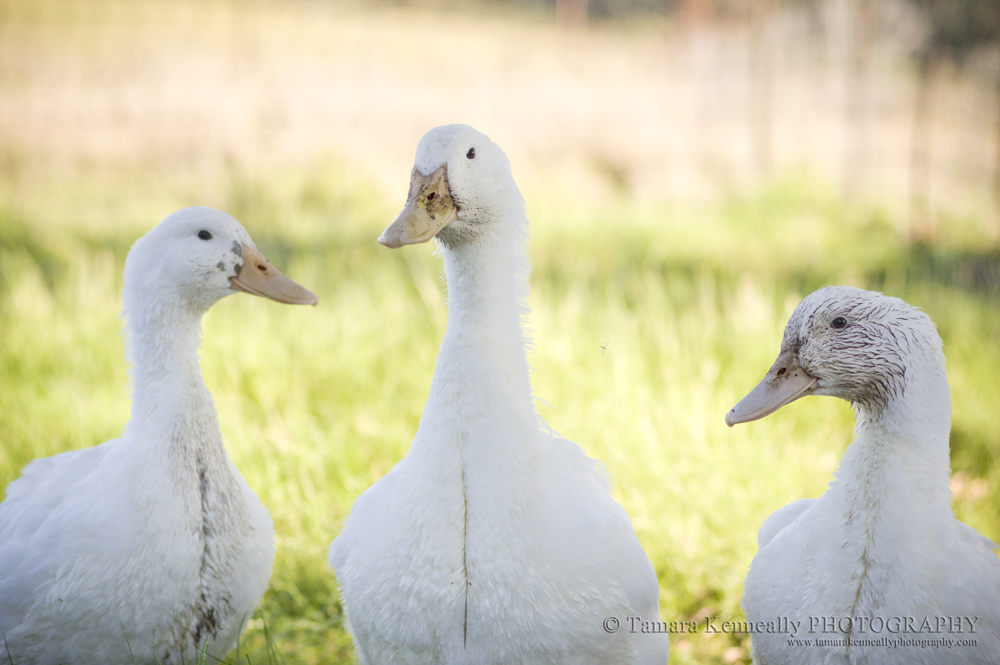
I named these three ducklings Templeton, Fern and Charlotte. The names coming from the tale, “Charlotte’s Web”.

16WEB

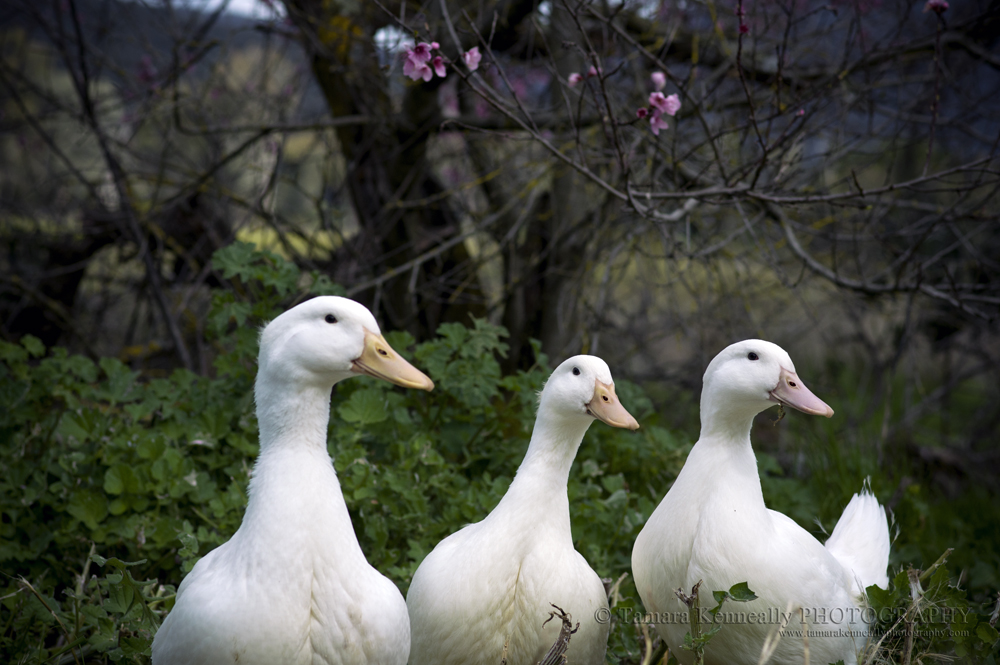
Templeton, Fern and Charlotte now live out their lives at Lefty’s Place. They are now huge birds and they still haven’t stopped growing. They love oats and lucerne, but what they love most is water. Three very lucky ducks.

Please don’t use my images without permission. All images are Copyright Tamara Kenneally

Anne Shirley

She was rescued in January 2013 from a battery egg farm in Werribee, Victoria.

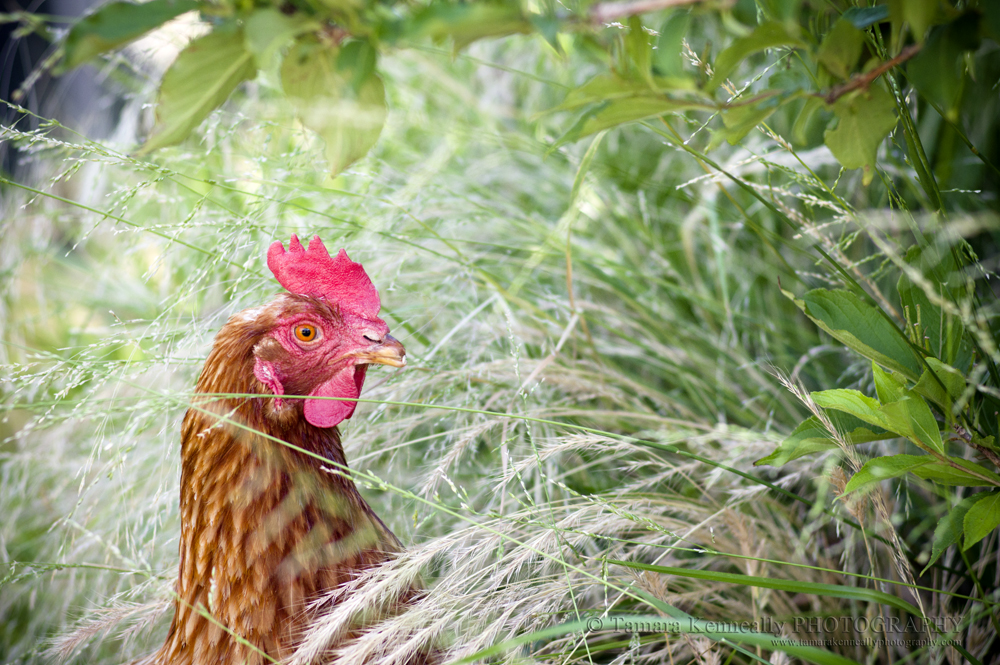
She was never a girl who wanted to really get to know me and she went along with her life doing her chicken business without much chit chat to me, often not even a glance towards me and I was totally fine with that. That stern, yet determined look she always had on her face meant she always had serious chicken business to do and she didn’t need any help from the humans thanks very much. She’d earnt a life to do as she pleased and talk to whomever she wanted to.

In October 2014 I noticed her becoming unwell. She had developed EYP and also had a tumour. Whatever I did, she wasn’t going to make it through, but I gave it my best shot to give her as long as possible whilst she was still happy. She lived another two and a half months incredibly happily on painkillers and medication, but today ( 27th December, 2014) was her  last day on this earth and she’s now gone on to her next journey.

I’m sorry I couldn’t do more for you sweetheart, we gave it our best fight together.

16web

Ivy

I turned my light on and saw her on the left hand bottom side of that cage. She was shaking. She wouldn’t stop shaking. She was shaking even before I turned the light on. She was absolutely terrified.

5web

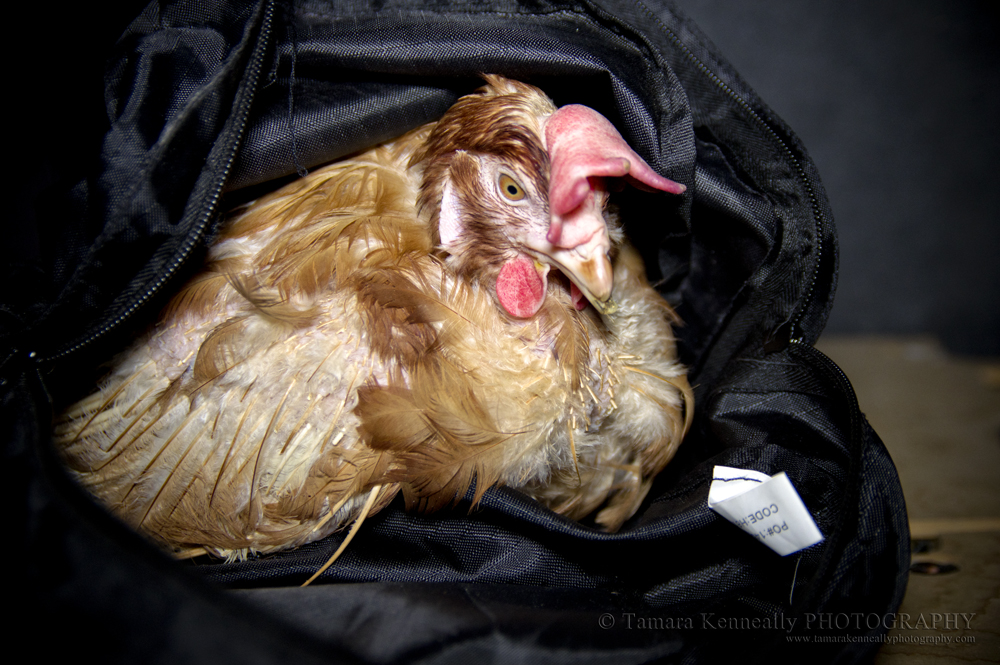
She made it out of that farm in a backpack.

9web

On the long way out my friend could feel her little heartbeat on her back and every now and again a little chirp. Our hands were full, but I wanted to take her.

Her name is Ivy. She is named after my Great Aunt who loved a chat. On her first day of freedom, she was still shaking.

6web

Ivy no longer shakes. She’s very excited about new things in life and feels incredibly frustrated if locked in anywhere. She loves mash and has just learnt how to perch. She loves people for some reason and just wants someone around to chat to.

39web

3ivyweb

Ivy, the backpack girl.

Please don’t use my images without permission. All images are Copyright Tamara Kenneally