Two Vegan Girls Interview

In May 2013, I was interview by Two Vegan Girls for their blog. Please visit their website and their facebook page at www.facebook.com/TwoVeganGirls. I am very grateful to them for their support.


AN INTERVIEW WITH THE INSPIRATIONAL TAMARA KENNEALLY


A couple of weekends ago I was browsing the Facebook page for one of my favourite animal sanctuaries, Freedom Hill. On their page, I read a story about a sheep, Righty,  that had been badly injured after it was attacked one night by dogs at a property in Victoria.  Since then, I’ve been visiting the page of Righty’s owner, Tamara Kenneally, to follow Righty’s progress and recovery following his ordeal.  Tamara is a photographer, passionate believer in animal rights, and she provides a home to many rescue animals.

I’m pleased to report, that Righty is recovering from his injuries and starting to get some of his spark back.

A week or so ago I was fortunate enough to interview Tamara about her passion for animals, life as a vegan and of course, about Righty.

1. Can you tell us a little about how you became involved in animal rescue and animal welfare?

I had a great love of animals since I can remember. It was always about animals for me. I’ve always felt more grounded and more myself when around animals. Our family cats always came from rescue organisations and when I was 11, my dog came to me because he was unwanted by someone else. I’ve always had animals in my life and when my partner moved away from the city and started living on some land in the country, we both decided to take on rescued animals.

I turned incredibly strict vegetarian when I was about 16, realizing my diet was completely working against my love of animals. Veganism came in my late twenties, but was always something I was working on being.  As soon as I turned vegetarian I was creating photographic work directly related to the plight of animals, including pieces on Gelatine, on food additives, on the relationship between dogs and humans and horses and humans. So I was an activist before I really knew what an activist was really!

2. How many animals are currently in your care?  What are some of the joys that your rescue animals bring you?

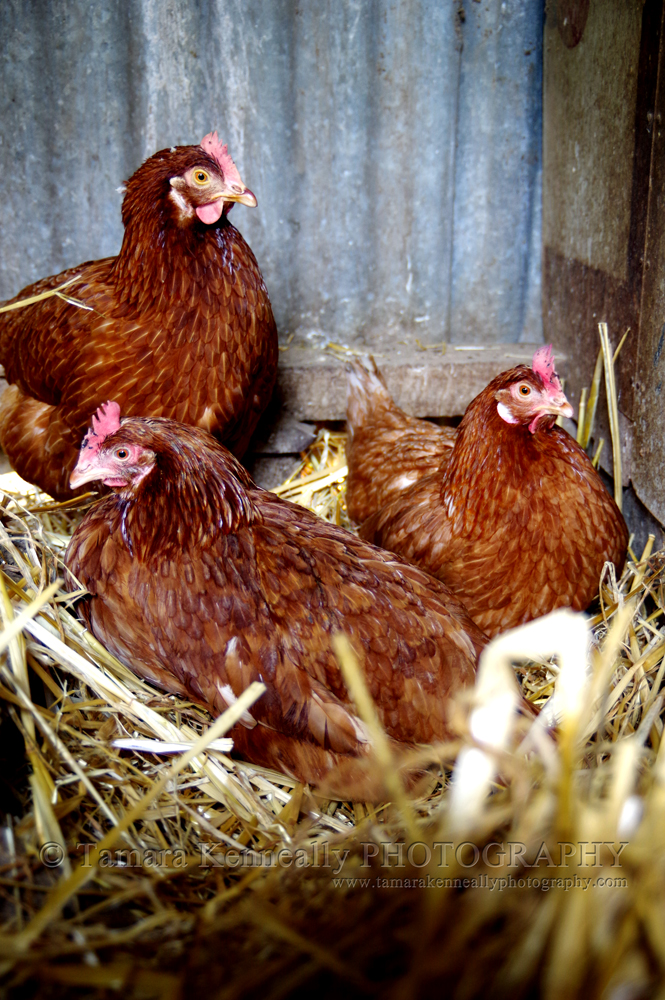
5 sheep. 29 chickens (ex-battery hens, broiler chickens and unwanted purebreds) 2 Peahens. 1 cat and my partner has 1 dog.

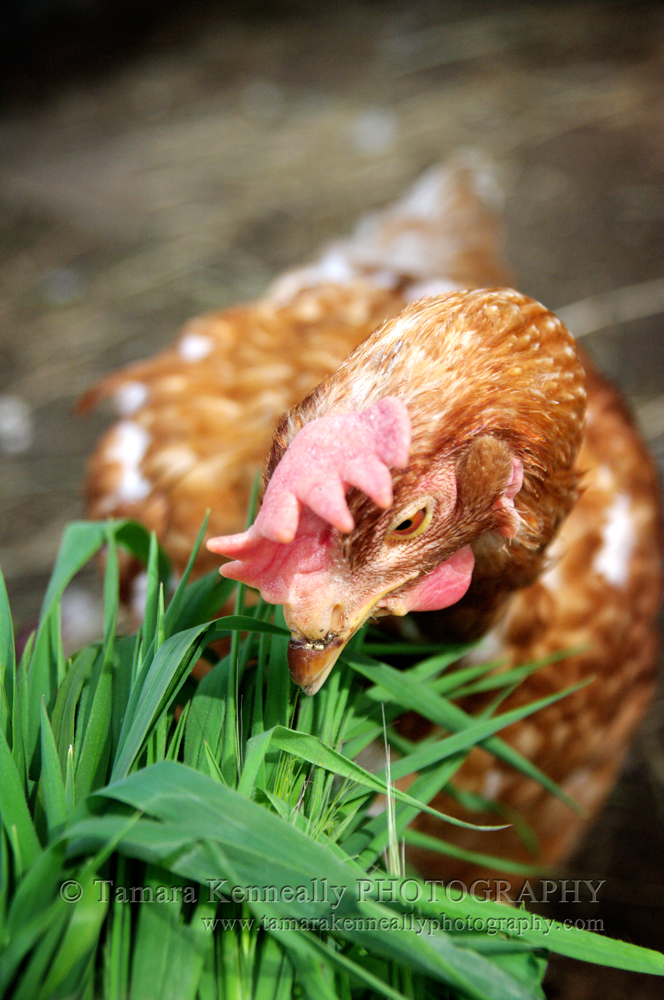
There is nothing quite like watching a bald battery hen take her first steps on grass and look up to the sky. There is nothing like it. It’s a mix of overwhelming joy and sadness. Joy for the chickens who now have freedom and sadness for the millions of chickens who will never experience it. Rescuing sheep who are terrified and have been abused is also a joy to experience. Having a sheep who would once run so far away from you, come up and sniff you on the face has to be one of the most beautiful moments you could experience.

3. Your photos capture animals in their natural habitat perfectly.  What are the key messages that you want to convey with your photography?

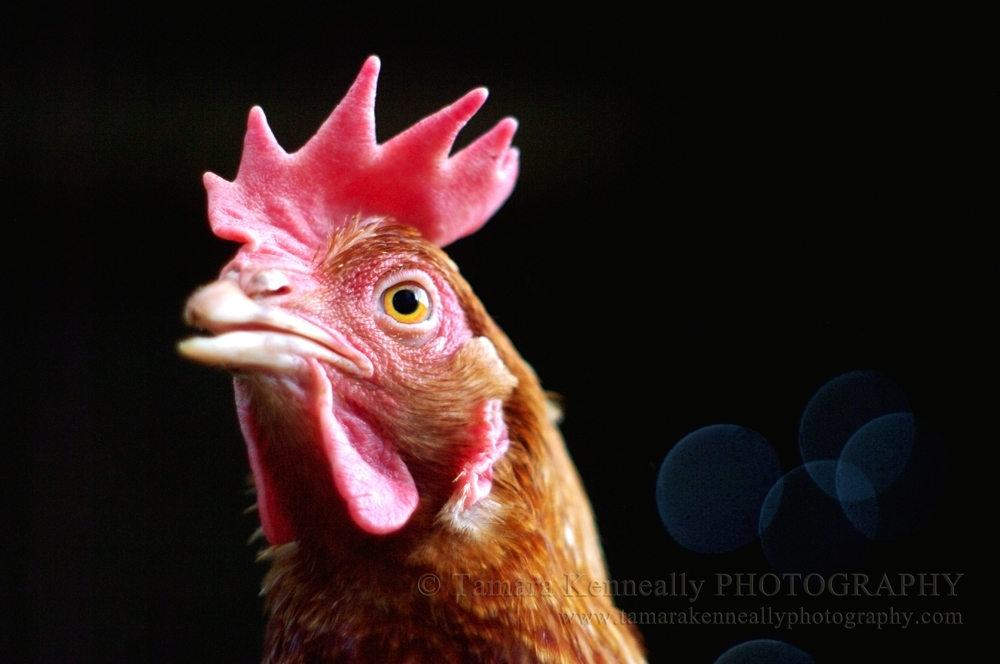
The main focus of what I do is to show animals as who they really are despite humans uses and views of them. I aim to tell their story through my portraits. Each and every animal is different. Their personalities are different, their likes and dislikes are different. Basically animals are all unique and different just like you and I, this is something I really want to portray, their individuality. For viewers to look at my images and believe that animals are someone and not something is something that drives me more than anything else.

4. What inspires you?

Pure and simple – animals. Animals have always been a huge part of my life and knowing what animals, particularly farm animals, go through on a day to day basis because of humans and their greed inspires me daily.

5. Your photography page on Facebook recently became very well known amongst Australian animal lovers after one of your sheep, Righty, was attacked.  Can you tell us a little bit about what happened?  How is Righty now?

Our sheep sleep underneath out bedroom window and one night at 2am, we were awoken by boyfriend’s dog crazily barking. We then heard dogs barking in our paddock. We jumped up and flew outside to find two Malamutes ripping apart our beautiful 3 year old sheep, Righty. We literally had to put ourselves between the dogs and the rest of the sheep and it amazes me that we didn’t get attacked. Righty was only minutes away from having his throat ripped out by the dogs. The next day, the vet gave Righty a 20 percent chance of living and the Ranger gave him no chance of living.  The vet hadn’t seen wounds so bad for a long time. After a week and a half of intensive vet treatment and contanst treatment on our behalf, he is still alive and slowly getting better. He’s vet treatment is being paid for by all the kind and generous people on facebook and I cannot thank them all enough.

6. What are some of the challenges that you face in providing a home to so many rescue animals?

The biggest challenge faced is financial. It really does cost more than most people think rescuing and rehabilitating animals. Food and veterinary cost can get quite overwhelming. The other challenge is dealing with animals who die prematurely because of their pasts.

7. Is there anything else that you’d like to share with us about you, your photography, or your rescue animals?

I do what I do for animals. I take photos of animals for the animals and I make next to no money from it and I’m fine with that. Farm animals are so much more than an egg, a wool jacket, a Big Mac, a sausage, a chicken burger or a slice of ham. Animals are individuals who suffer just like humans do. I’m waiting for the day more people can see that and if my images can change even one person’s views on animals, then I’ve done a good job.


rightyrightyweb


Pepper

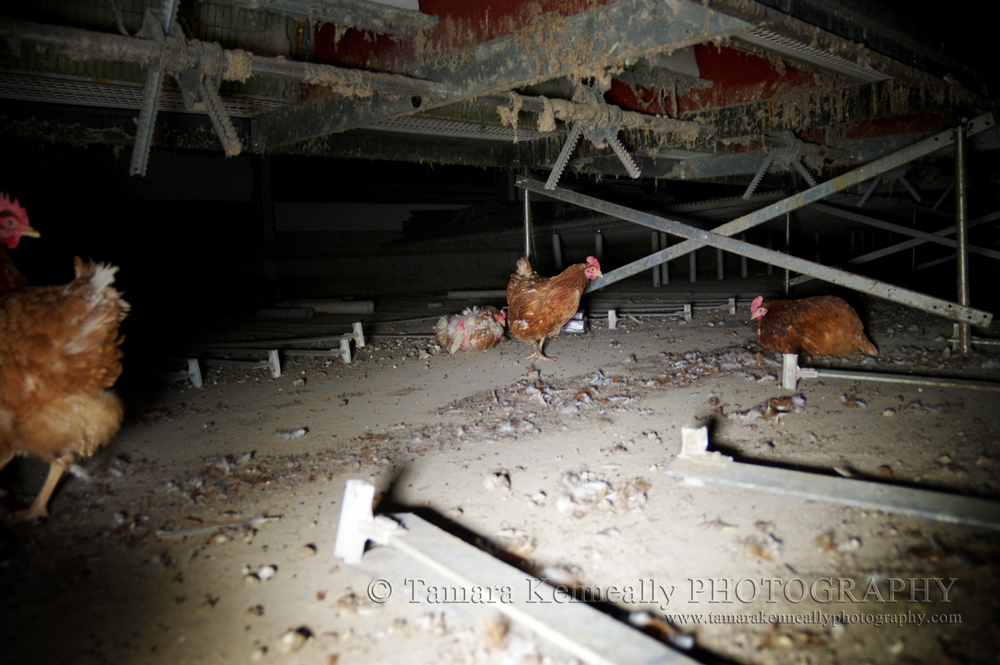
One crisp night in May, 2014, we wandered into a free range farm. Half the sheds on the property were caged hens and the other half was what is termed “free range” These sheds were huge, with access to the outside being about the size of a small courtyard. We came across an open shed. The first thing we saw were dead chickens lying everywhere outside. When we walked into the shed with it’s doors left wide open, we found a dissembled free range egg shed. The floors had been taken down and all the chickens had been sent off to slaughter. In egg farms, hens only get to live up to 18 months old because it is deemed that their egg production slows down after that time. This is the same in cage farms, in barn laid farms and in free range farms.

10web
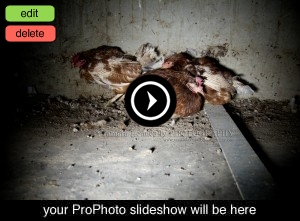
The emptied shed with hens left behind to fend for themselves.

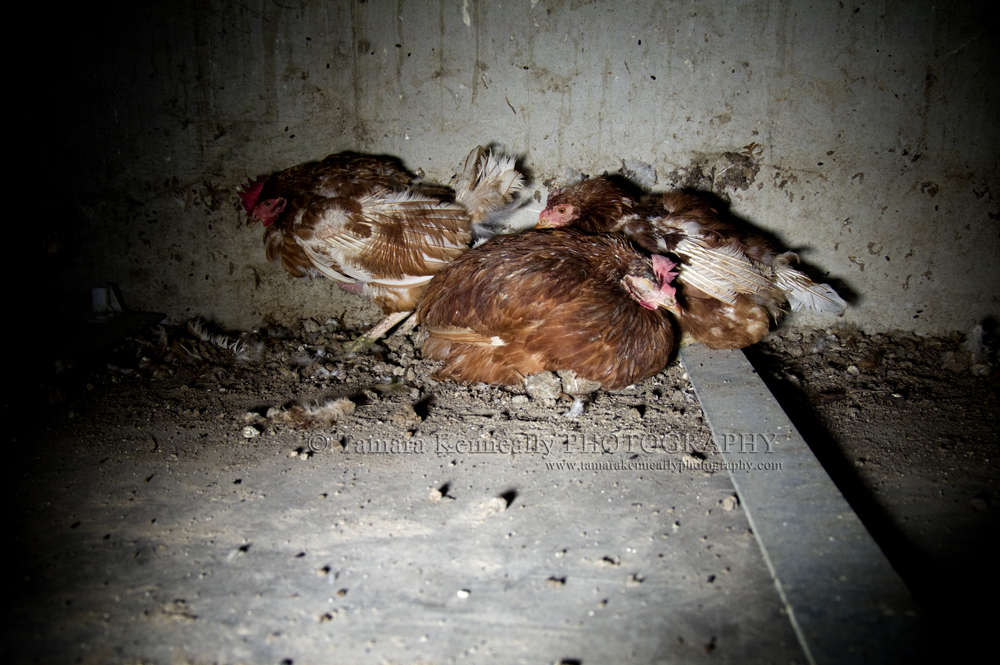
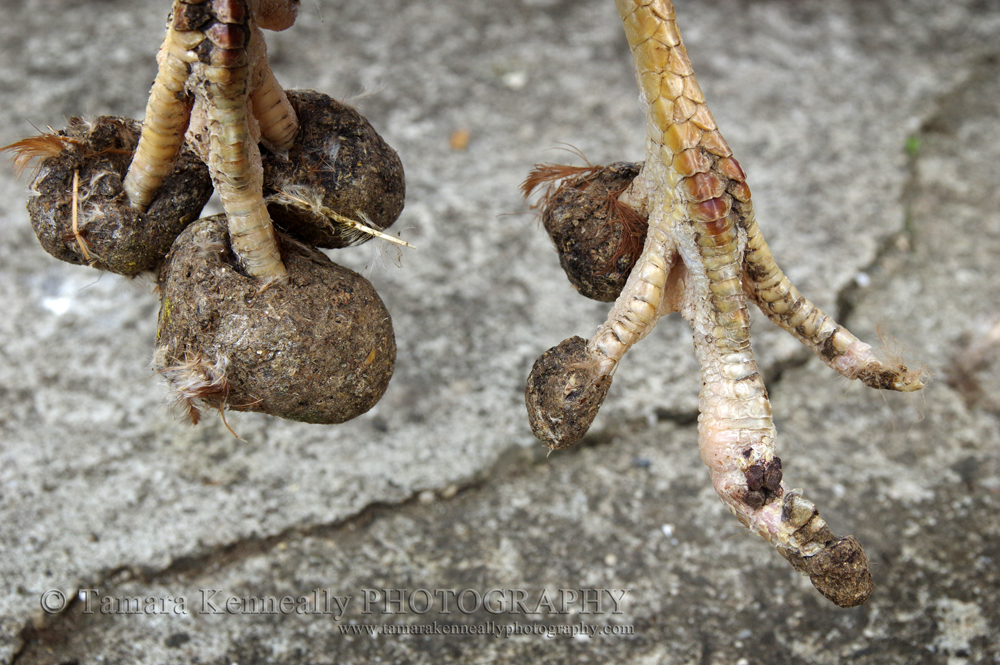
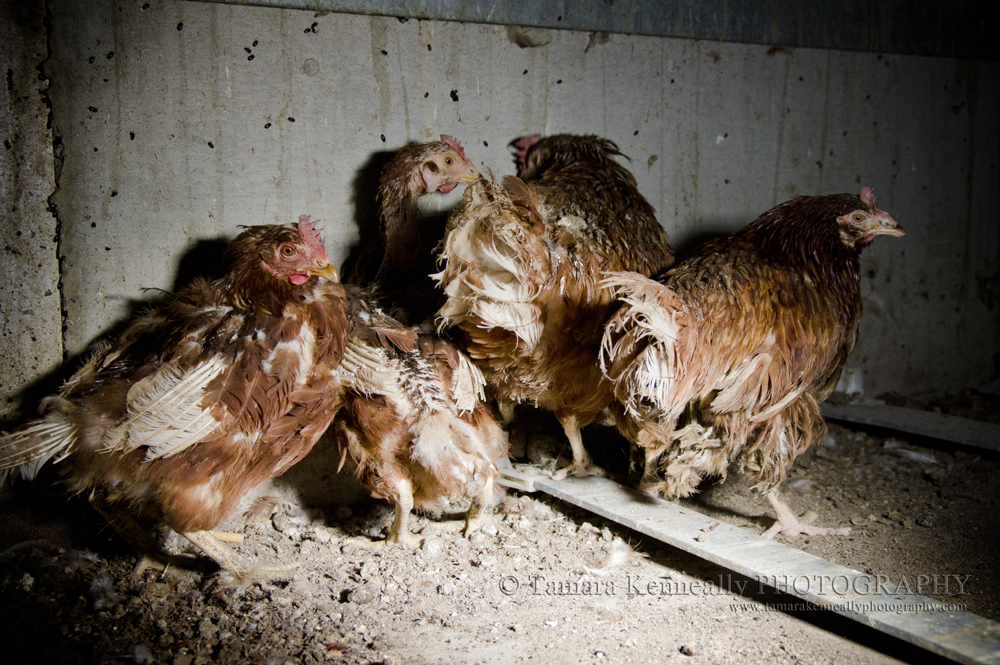
Up to 60.000 chickens in this one shed had been picked up, thrown into a truck and driven off to get slaughtered, but there were some left behind. The girls who couldn’t be caught and the girls who hid from the workers now huddled against the shed walls, starving and thirsty with no protection from predators. They had been there for up to a week, waiting to be picked off by foxes and listlessly searching for food and water.  Half of the remaining emaciated hens in this shed had their feet encased in large clumps of manure and mud. This is a direct result of living in a free range shed. Free range shed floors are full of small semi circle enclosed holes which manure gets caught in. Hens step into these holes and their feet get trapped in manure balls forever.

1web
Pepper and her friends huddled against the wall.

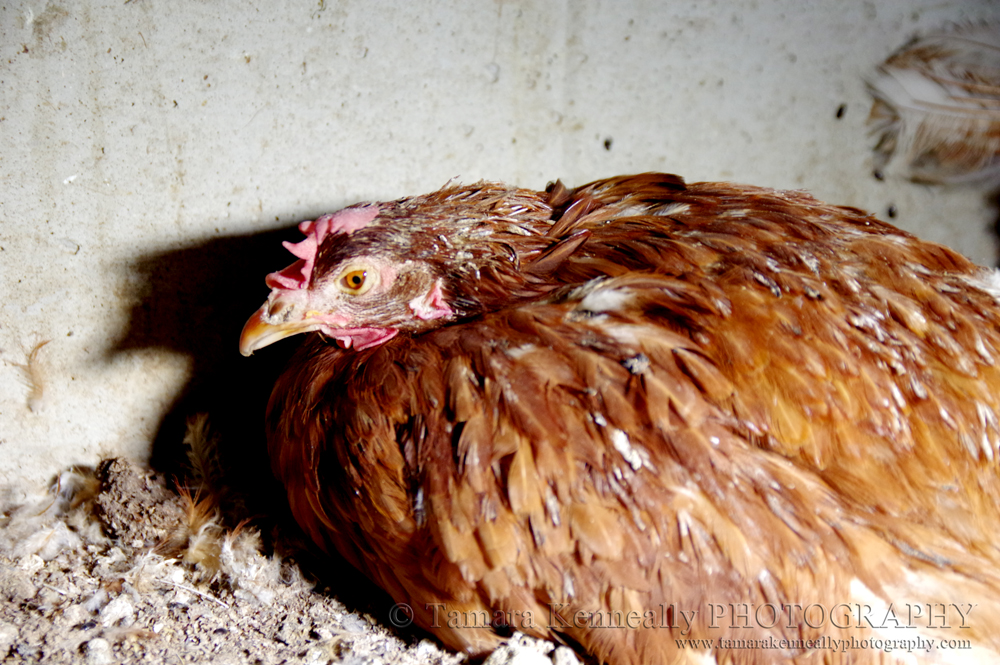
When I first saw Pepper, she was cowering against the wall of the shed with a group of other hens. She got up to walk away from me, but I noticed that her feet were complete manure balls and she had incredible trouble walking. We noticed that she was friends with one particular, terrified, bald hen. My friend scooped up the bald hen and I grabbed Pepper. I put her under my jumper and all I could feel of her was bones. She was completely emaciated. Her feet, covered in manure, hung down below my jumper as we made the trek out. Both those girls came back to my home and both were two of the most terrified hens I have ever rehabilitated.

15web
Starving, thirsty Pepper.
2web
Pepper’s feet encased in hard manure from living in a free range egg chicken farm.

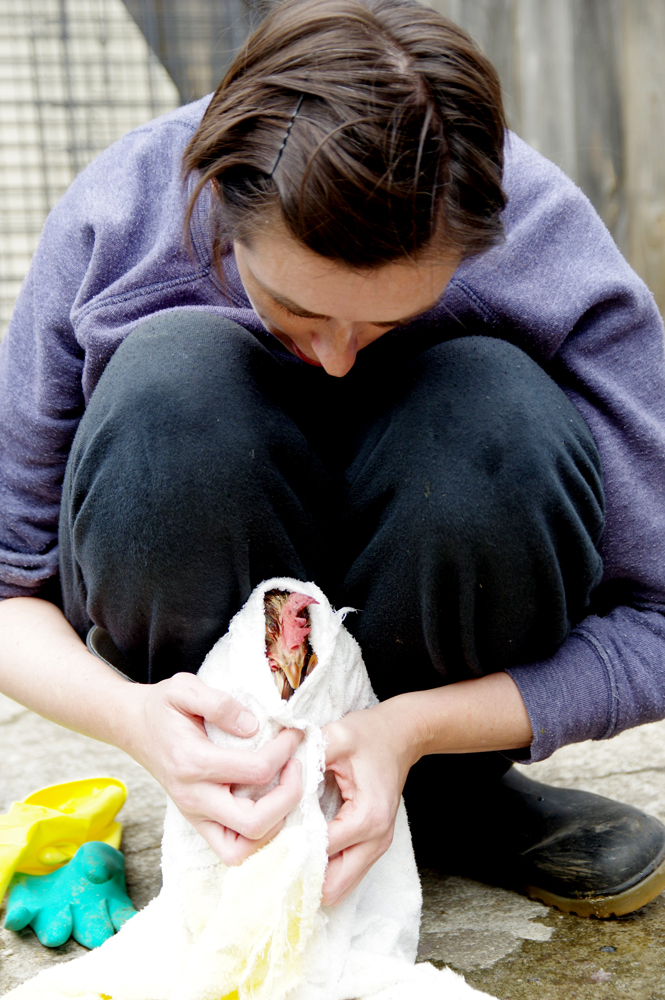
Pepper’s feet were so bad that it took me days and days of soaking and cutting to get it all off. Once I did remove it all, I realised one of her toes was broken, so she was given pain relief and antibiotics for a few weeks.

3web
I had to bathe and soak Pepper’s feet until it was all off.

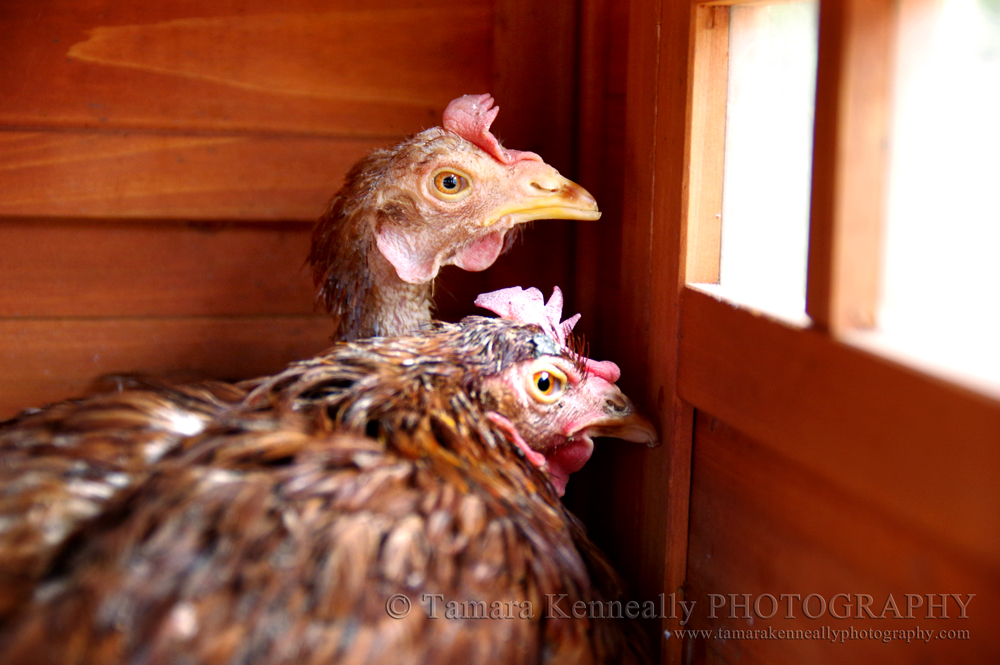
We named Pepper’s friend, “Bowie”, after 1970’s David Bowie because she was so thin and pale. Pepper and Bowie were very protective of each other and the best of friends. I would not and could not separate them.

12web
Terrified best friends – Pepper and Bowie.

Pepper was named after a character in Annie who has attitude and spunk, but these days Pepper is also known as “Hagrid” and “Bigfoot” because she is an enormous chicken! She is just huge and she often still walks around like she has the manure balls on her feet. Pepper is a great reminder that free range eggs are not humane and are not free of cruelty. This hen and her friends suffered from the heights of cruelty because of man’s insatiable appetite to eat eggs.


15web

21web

  Please don’t eat eggs. You don’t need them.


Please don’t use my images without permission. All images are Copyright Tamara Kenneally

Sweetness (aka Rascal)

Sweetness was rescued on 6th of July, 2013. Whilst documenting a battery egg farm, my friend and I saw a lone hen standing in the middle of a cage surrounded by cages apon cages filled with thousands of trapped hens standing on wire. We both stopped at her cage, looked at each other and decided to take her with us. On the journey out, she was named “Sweetness”.

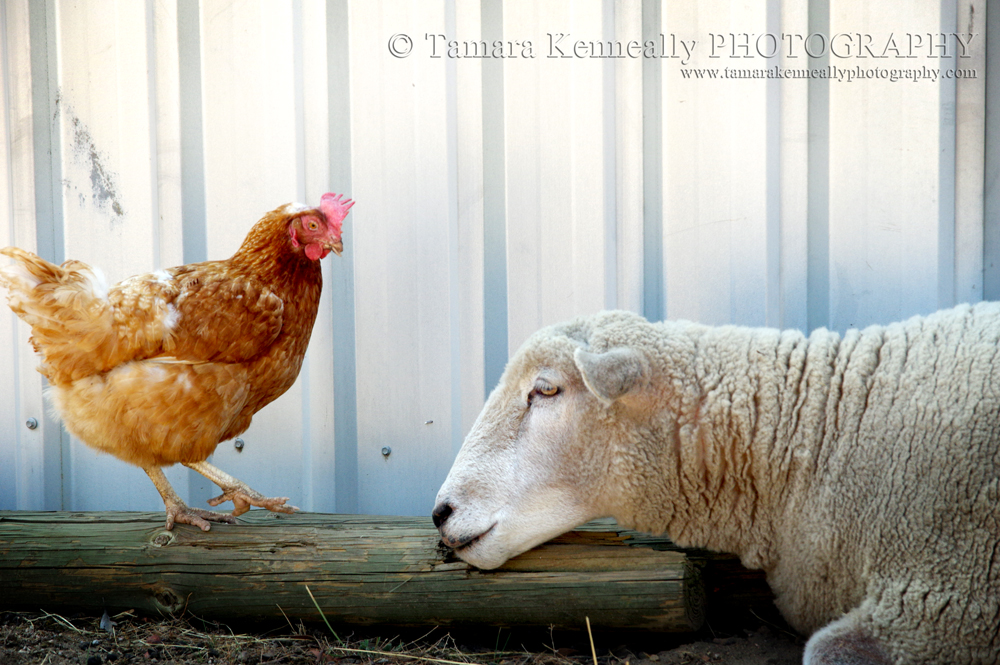
Sweetness with Righty
One of her first days of freedom.

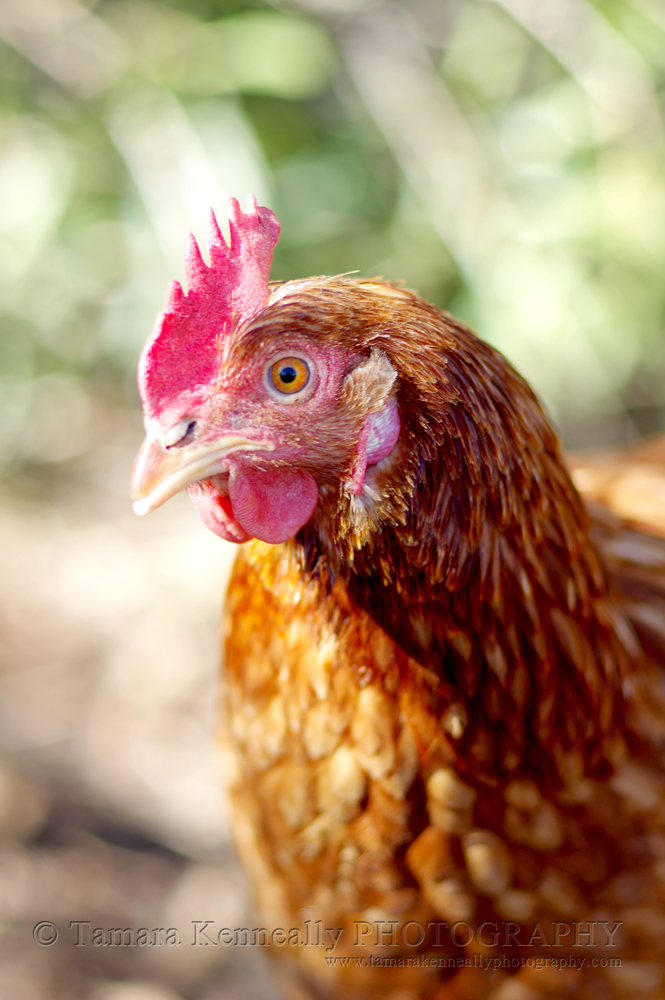
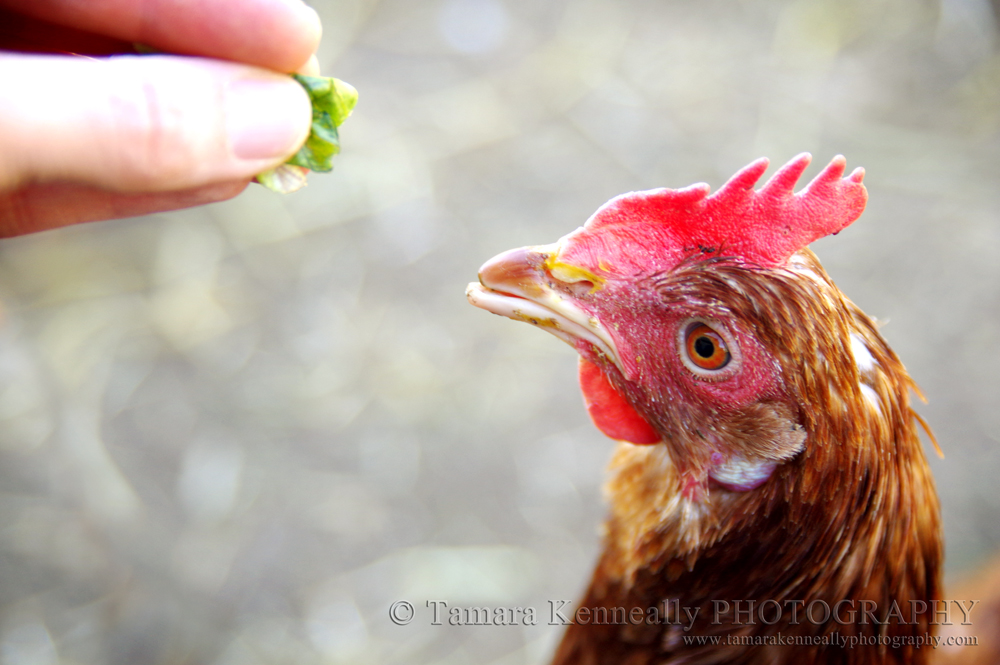
 Sweetness was shy and quiet for quite a few months after her rescue, but these days she is oh so different. Sweetness has earned the nickname “Rascal” because she is as cheeky as can be. She is the girl always by my side just in case I drop some lettuce. She is the girl with her head in my pocket when I am sitting down, trying to find some lettuce in there. She is the girl who is always talking. She is the girl who is head over heals in love with Super Chicken, our rooster.

5web
Sweetness Loves Super Chicken Forever

She is a complete joy to know.

Please don’t use my images without permission. All images are Copyright Tamara Kenneally

Big Steggley

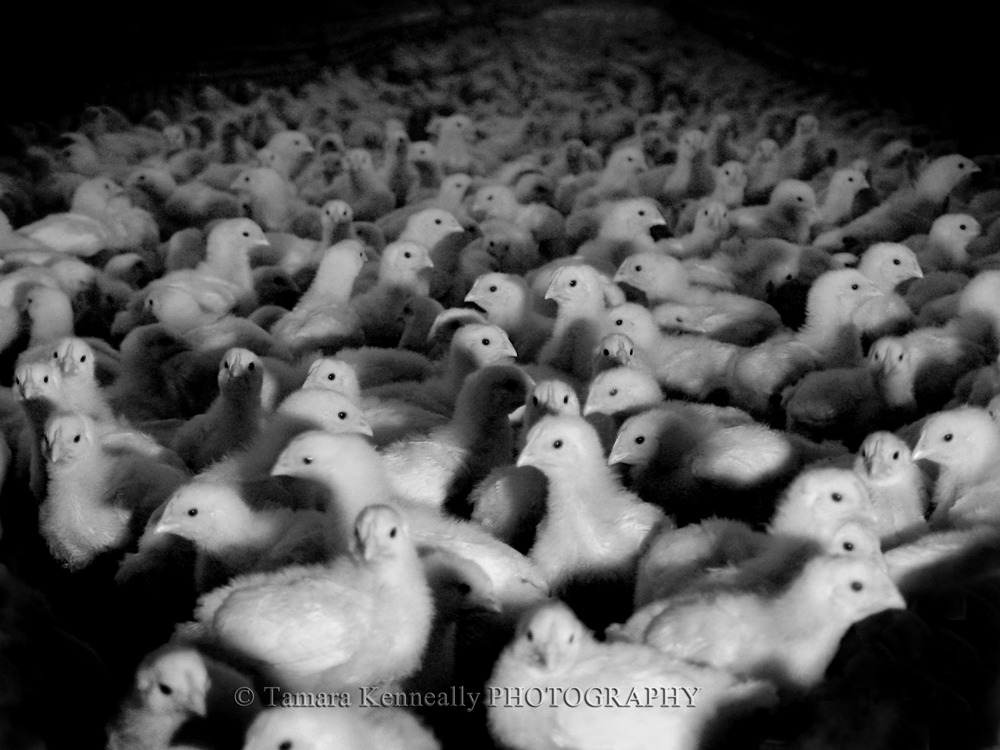
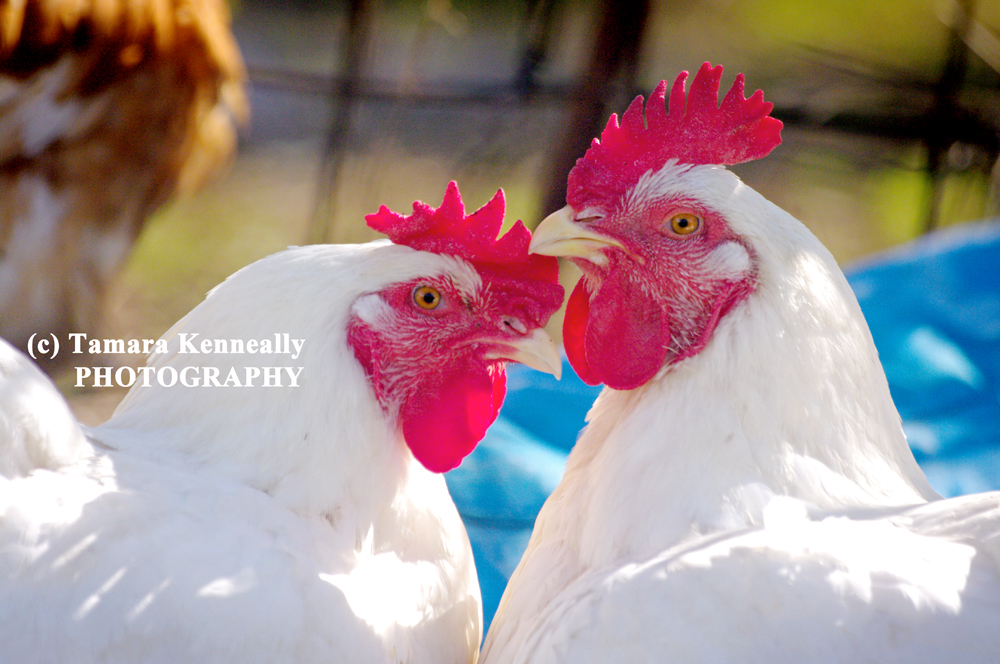
She came to us from a shed just like this in 2012. She was a rescued broiler (meat) chicken who was bred to be slaughtered and eaten by humans.
3web

She was dropped off at our place when she was about 4 weeks old with her friend, Maggie (pictured with her below), who was also rescued from the same farm.

1.1WEB

The first name I gave her was “Lily”, but that very shortly got overthrown by a nickname J gave her which was “Big Steggley”. I was appauled at the name at first, but then realised that it was her and she responded to it more than she ever did to the name “Lily”.

Big Steggley was a loner. She was a chicken who knew what she wanted and who she needed to hip and shoulder to get it. She didn’t let anyone get in her way. She slept on her own bed that I specifically made for here each night, in the corner of the chicken coop. She preferred to sleep alone. She grew to be such a huge chicken. Broiler chickens (chickens bred for meat) are selectively bred to reach slaughter weight at 5-7 weeks old and if they are lucky enough to be rescued and live beyond that, they don’t get to live for long. Their bodies grow too big for hearts and legs to handle. Big Steggley grew so huge. Every morning we would report back to each other with joy that she was still with us because we knew that it wouldn’t be long until she left us. We watched her become slower and slower. She still waddled into the sun to bask in it’s rays, but she did so in slow motion. We knew it was nearly time.
8web

Then one day I got the call whilst I was at work. J found her dead on her little bed. We were both very upst. She had been such a big and important part of our place for such a long time. She got to live for 16 months, which is 15 months more than more broiler chickens ever get to live. We miss that cranky, defiant face staring back at us when we say there’s no tomato left. Such a character who we will never, ever forget.

Please don’t use my images without permission. All images are Copyright Tamara Kenneally

Little River

This is River. I call her “Little River”

3web

Rescued in late May, 2014 from a free range egg farm. River was starved and denied water for up to a week (maybe longer) Her many thousands of friends (and enemies) in that shed were sent to slaughter at 18 months old. River evaded capture and was left in the shed to die with many others.

4web
The farm where River was found starving.

River is obsessed with water. All the girls I care for from this one shed are obsessed with water. They drink more than they need to and never, ever go far from water. This is a direct result of not having any water for so long. The farmer didn’t care how much they suffered, he/she just left them there to die.

6web
Little River is at the front on the left

River is a beautiful girl. She loves her days in the sun. She chats to me all day and if I was to take a guess at what she is saying to me, I think it’s – “I love water. Thank you for the water”.

4web

Free range isn’t cruelty free. You are still using these hens for what their bodies produce. These girls give me enough everyday just being who they are….no eggs involved.

Please don’t use my images without permission. All images are Copyright Tamara Kenneally