Lefty

Oh Lefty. How do I write about such a beautiful soul and do him justice? All I can do is try…

One day in August 2011, two little wethers were dropped just inside our gate. The farmer mentioned that he had been calling one “Albert Einstein” because he was so smart and the other one “Crazy Eyes” because he was a little bit “Not Quite Right” in his words. “Crazy Eyes” had apparently had his horns cut down way too close to his head and the farmer thought the antiseptic ointment got into his brain somehow. I don’t know if I believe that or if I believe that ‘Crazy Eyes” was just a little bit weaker and sicklier than his other sheep. A few days with us and “Albert Einstein” was known as “Righty” and “Crazy Eyes” was known as “Lefty”.
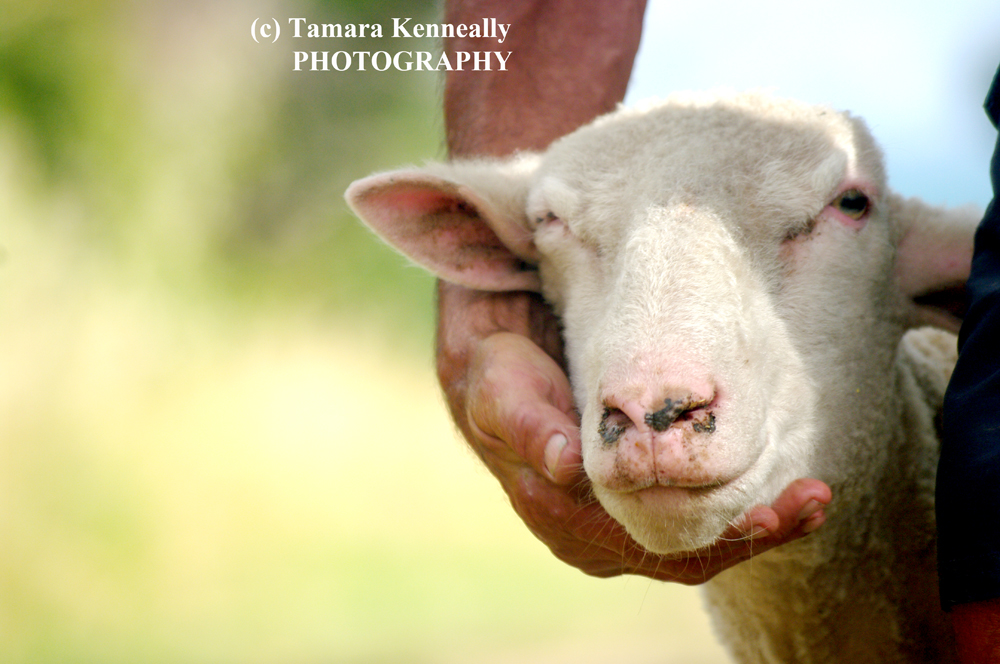
Affectionate and gentle Lefty

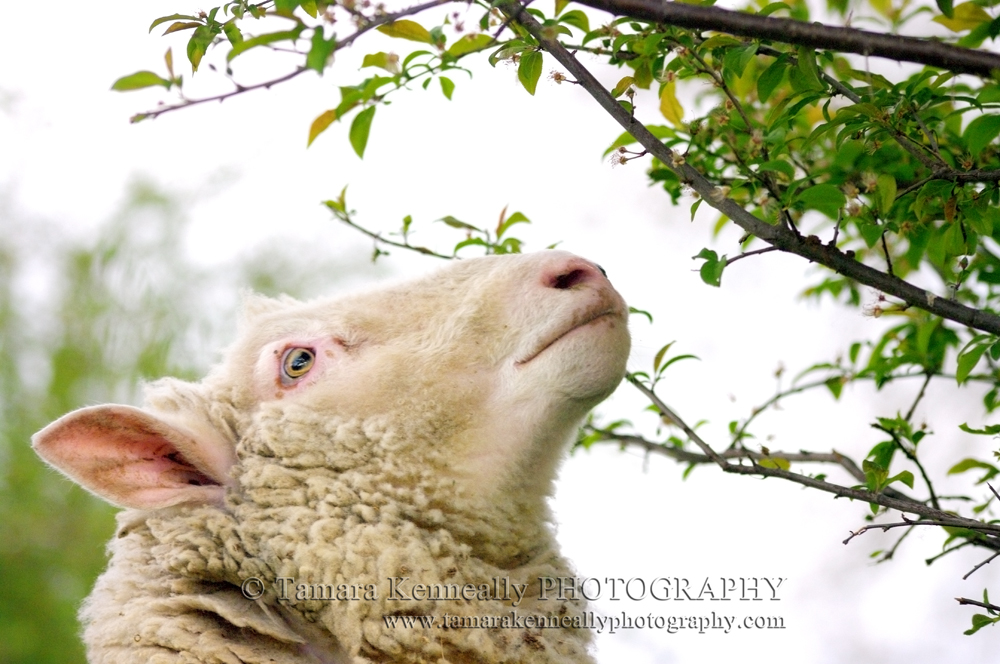
After a few months with us, these two little scared boys became friendly, cheeky sheep and their personalities started to shine through. Righty was obviously the mastermind of the duo, always thinking and always watching. Lefty was the the quiet, reserved sheep who didn’t want any trouble, he’d often stare at me for the longest time and then he’d amble over and sniff my face. Lefty was unable to, or was too uncomfortable to baa for a few months, but when he started to baa he couldn’t be stopped!
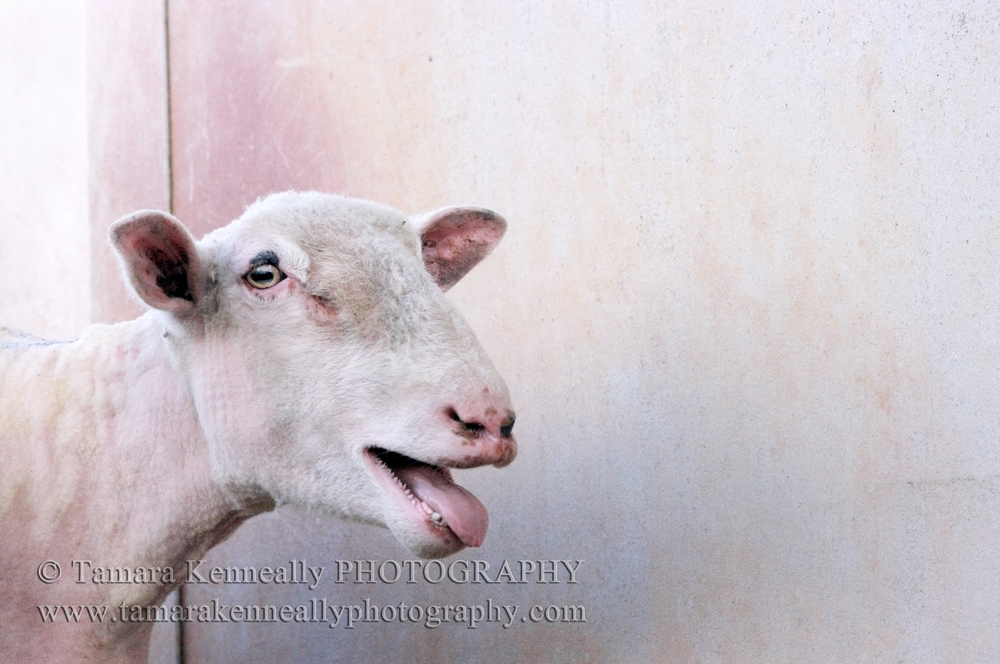
Lefty to learnt to baa after being with us for three months

Lefty and J became the best of friends. Every morning Lefty would walk over to J whilst he was sitting on his chair outside and place his head on his lap for a pat. J loved Lefty like he loves his beloved dog. No sheep I’ve ever known has loved affection as much as Lefty, he lived for it. He’d put his head under your hand and asked to be petted.
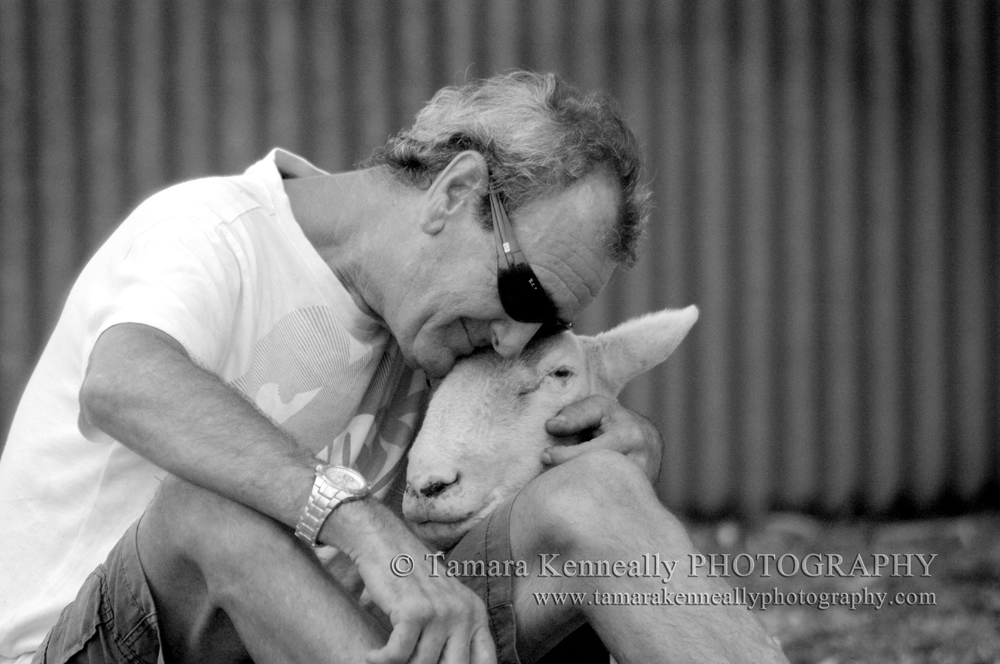
J and Lefty. An unbreakable bond.

Lefty and Righty were always so close, they had came from the same farm and had both been bottle raised at the same time as they were both orphans. Best friends stick together and look after each other, and this is just what Lefty and Righty did. When a little lamb called Junior was introduced into the flock, Lefty became so upset and jealous of him, that he treated him terribly for a week or so. Everything calmed down eventually and we had Righty (Mr smart leader), Junior (Mr free spirit), and Lefty (Mr gentleman, affectionate soul)as our flock.
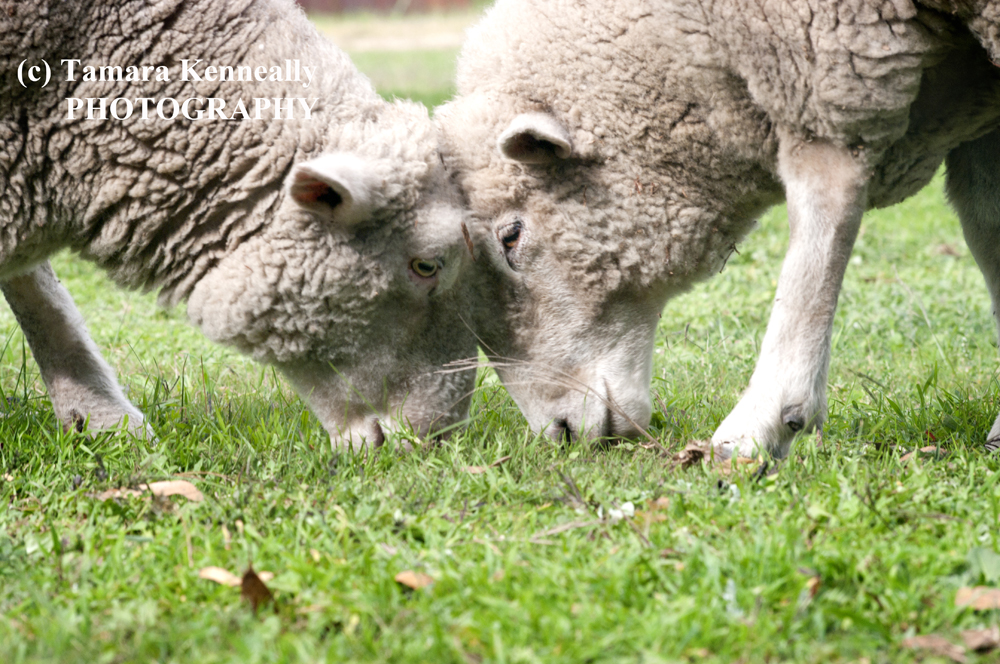
The best of mates

The day we lost Lefty for good was on January 8, 2013. We had no idea that day would bring such heartache and we would loose our beautiful boy for good. He went down hill rapidly from a combination of heat and blood, oxygen and heart problems. The vet’s couldn’t save him. It just happened so quickly. He died with his head in J’s lap whilst being told he was loved.

The morning after Lefty passed away, I found Righty calling for Lefty. He thought he was in the sheep shed. I took Righty around and showed him Lefty’s body before he was buried. It is one of the most heartbreaking things I’ve ever done. Righty sniffed Lefty’s face for quite a few minutes and then looked up and stared right into my eyes with a look of “No?”. Righty has been extremely lost without his best mate for the last couple of weeks. Every now and again he looks around and calls for him. He has been incredibly depressed. Don’t ever let anyone tell you animals don’t grieve, they grieve as deeply for their loved ones as you or I.
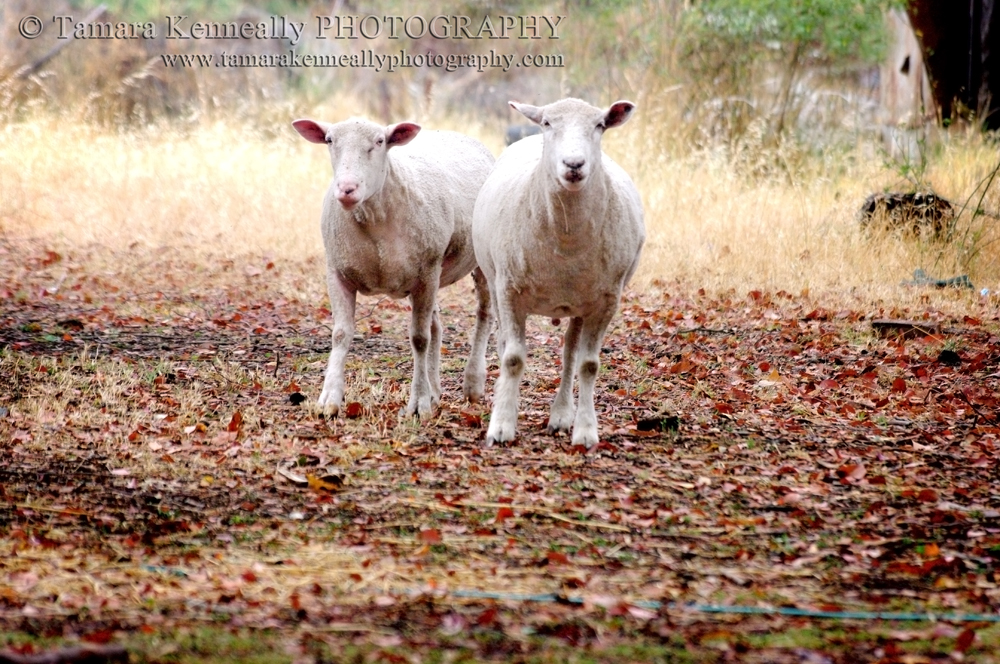
Best friends, Lefty and Righty.

We all miss our gentle family member Lefty, with his gorgeous eyes that looked right into your soul. It’s a shock to walk out the front door and not have to step over 80kgs of sheep dozing in his favourite spot right on the doorstep. It’s a shock to see Righty without Lefty. It’s a shock to not have a surprise sheep head under your hand asking for a pat whilst you go about your daily chores. It’s just such a shock to have such a big part or your family ripped away so soon. He was so young. Only nearly 3 years old.
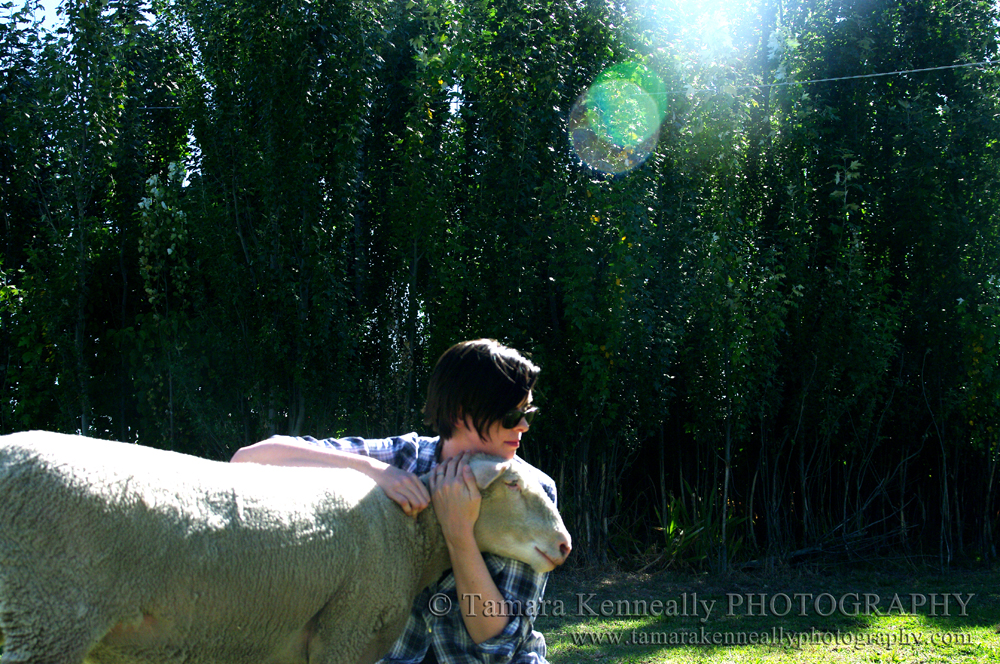
Sweet Lefty and Me.

We love you our beautiful boy. You will never leave our hearts. There is no-one like you.

The following is a slideshow of selected photographs from Lefty’s life.
Please don’t use my images without permission. All images are Copyright Tamara Kenneally
Copyright Notice

All images are copyright Tamara Kenneally 1994 – 2015.

These images cannot be used without permission.

Please contact me for use of my images.

I am very happy for them to be used for promoting kindness to animals everywhere, but please ask me first and always credit me.

All my images are part of my history and my heart and I will not tolerate not being credited, having them used without my permission or having them cropped or altered in any way.

Thanks for respecting that.

6web

Summer

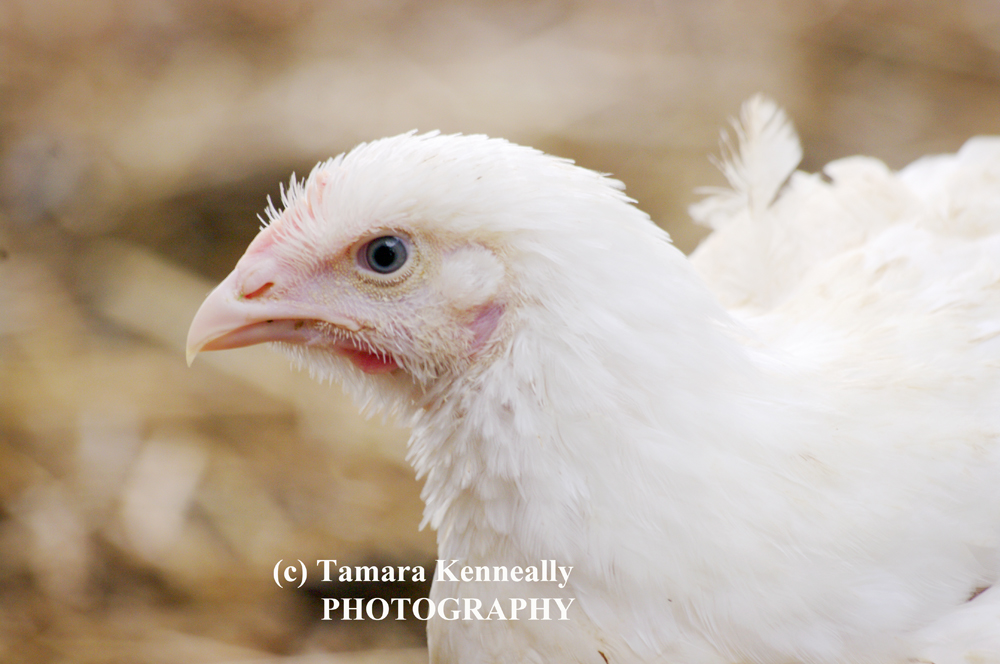
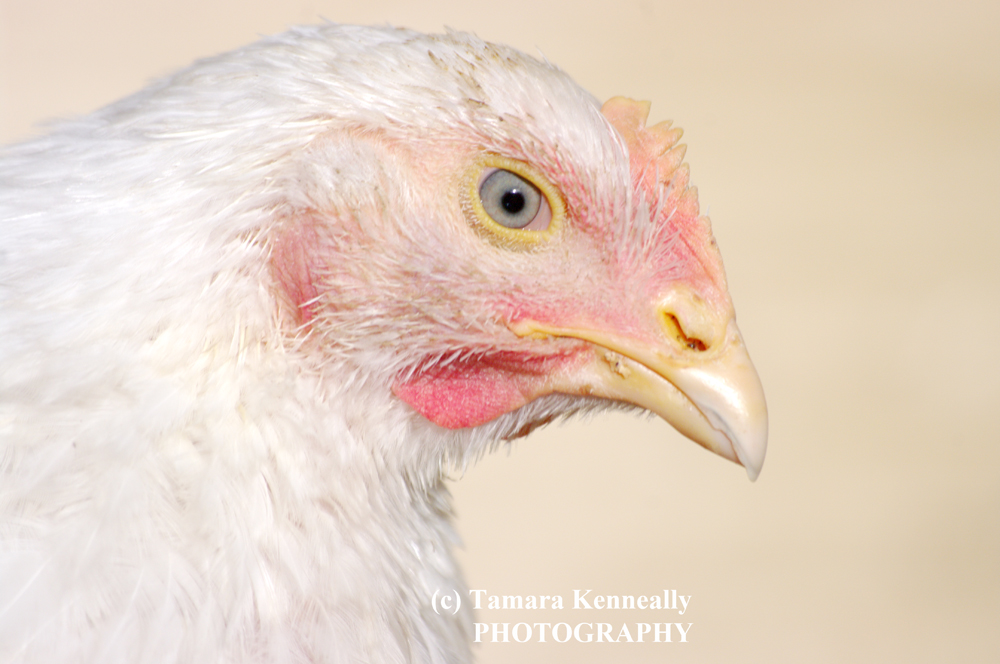
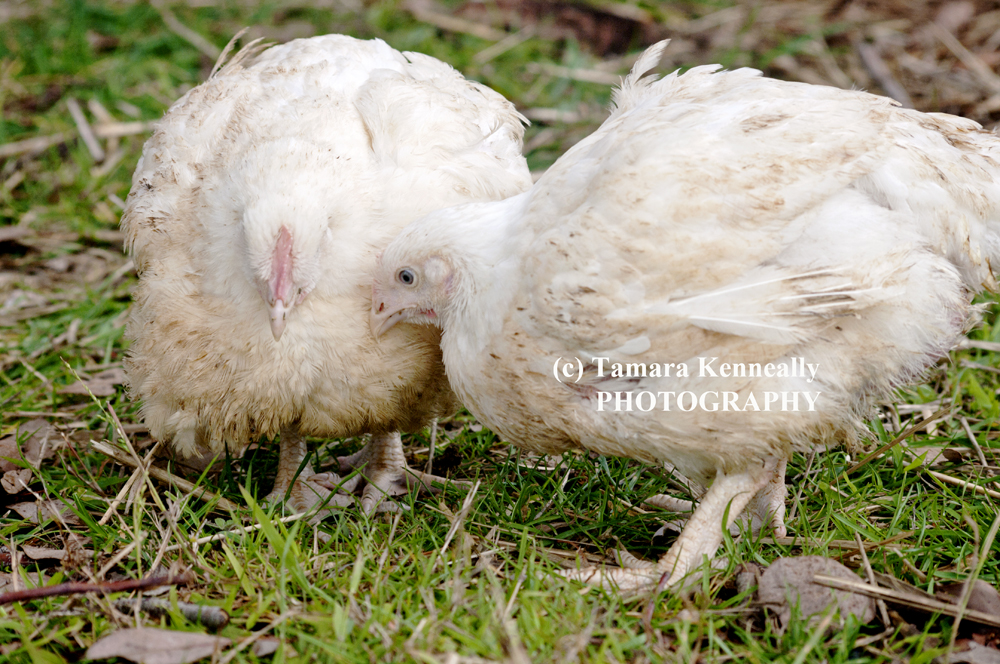
On June 25th 2012, I met two little, four week old bundles of fluff. They had recently been rescued from an intensive chicken meat factory farm and were unable to walk, were covered in faeces and smelt of ammonia. They both looked up at me with their baby blue eyes, chirped and from then I fell in love. Being broiler chickens, they were bred to not live past 5-7 weeks old. The shed they came from was cleared the next week and the rest of the chickens in that shed were sent to their deaths to become a chicken nugget, a chicken burger or a roast chicken that you see on the supermarket shelf. These two little broiler chicken babies were lucky, they had a chance to learn how to walk, learn how to live and learn to be  chickens. Broiler chickens are not bred to live very long. They are selectively bred to grow as fast as possible in the shortest amount of time possible, this means that the lucky rescued ones never live very long lives. Due to their size they have massive health problems, their hearts often give out and they can no longer bare the weight of their bodies. Knowing this, I named these two little bundles of fluff “Summer” and “Autumn” in the hope that they would live to see and experience the seasons they were named after.

Summer and Autumn learning what grass is.

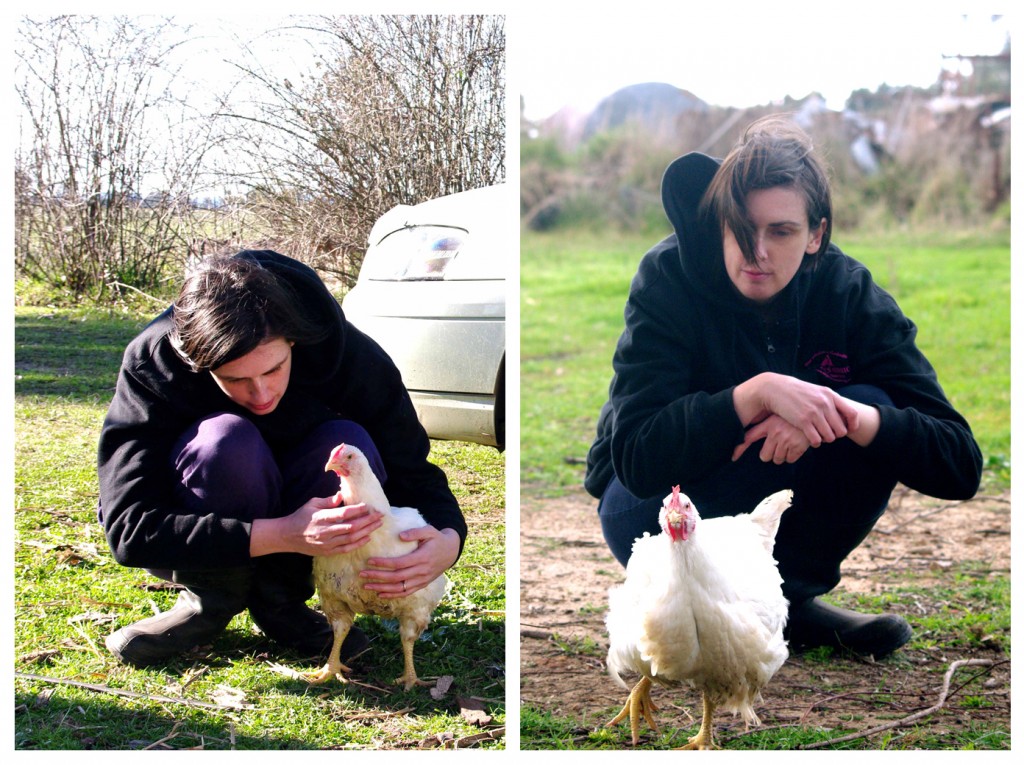
Summer and Autumn grew up in our laundry, being too small to be in the chicken coop with our other chickens, we thought it safer to get them strong and healthy before introducing them to the flock. The girls slept in the laundry in the night and had their own fenced off section outside during the day. J started saying “Hello Little Mates” everytime he would walk into the laundry and both Summer and Autumn started responding to the name “Little Mates” and would chirp when we said it!  Sadly, Autumn passed away only four weeks later and Summer was left all alone. We quickly introduced her to the flock and she spent her first night in the chicken coop in a crate the night that Autumn died.

Summer

We are guilty of mollycoddling Summer, but I just wanted to keep her safe. She followed me everywhere. She would waddle after me and seek me out wherever I was. I would call “Little Mates” and the next minute there she was, chirping and waddling up to me. We were such good friends, she took comfort in me and saw me as a mother…all babies need a mother and because she never got the opportunity to meet hers, she chose me.

Little Mates (Summer) and Me

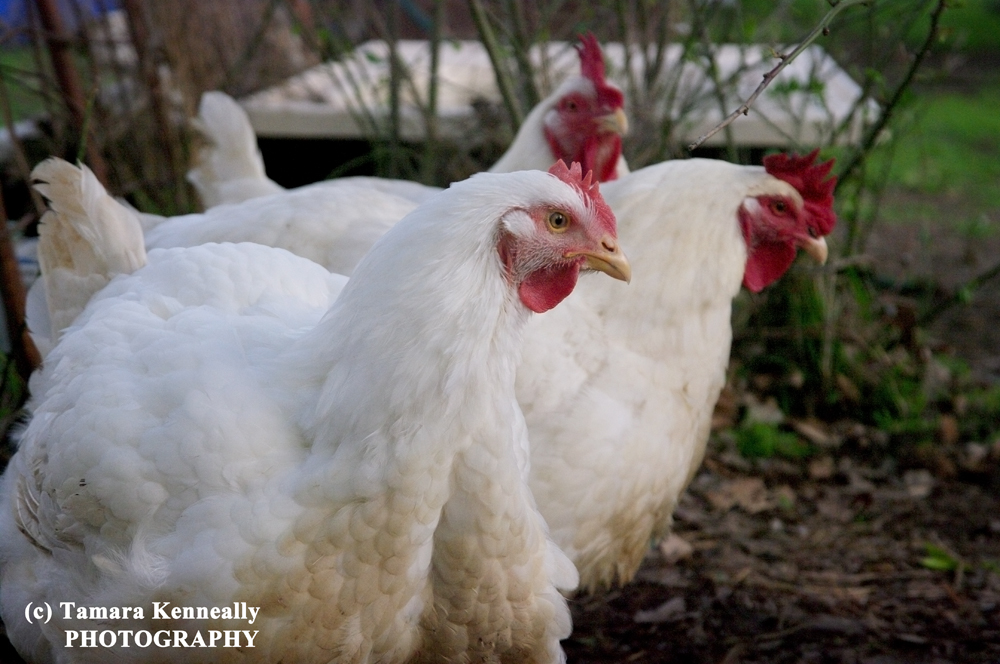
It took her a while to fit in with the flock and she was bullied mercilessly for a little while, but soon fitted in. She made friends with our two other broiler chickens, Maggie and Lily, and they formed their own special gang. Summer didn’t need me so much then, but she still let me pat her, hug her, give her grapes… and she still chirped and waddled over to me at the call of “Little Mates”

Summer and her friends Maggie and Lily

I always knew that I wouldn’t have my sweet Little Mates for long, such is the sad story of a broiler chicken. I watched as she became larger and larger and started to have trouble walking. I started to pick her up and carry her so she could keep up with the other chickens. I hand fed her treats because she couldn’t compete with the other girls for them. I bathed her in the heat of the day…and the night. I tried everything to prolong her life, but ultimately I knew she didn’t have long. The last time I saw her, I gave her a cuddle, told her I loved her and said goodbye. I knew I’d never see her again. She died at lunchtime on January 3, 2013, most likely from a heart attack or some heart related problem. She made it to Summer, but didn’t make it through Summer.

My last day with Summer

Although heartbroken at losing my sweet little lady, I’ll always be grateful that I knew her. I’ll always be grateful that she got to learn how to live in the real world as a real chicken and I’ll always be grateful that she is buried here with us instead of being someone’s dinner.

Goodbye my Little Mates. Always in my heart.

Please don’t use my images without permission. All images are Copyright Tamara Kenneally
ARTIST STATEMENT

The beauty of animals captivates me.
Their truth, instinct and innocence grounds me.
All I ever wanted to do was to be surrounded by animals, they tell you exactly who they are through their eyes and their behaviour.
Humans create so much pain for so many animals and without a voice they can’t tell their stories. I try to speak for them through my images.
I produce bodies of work which look at animal issues whilst also portraying the beauty of the animal.
I like to represent my subjects as the individual souls and personalities they are.
All animals are worthy of a happy, enriched life. All of them. The dog chained up in the backyard. The chicken at the factory farm. The bird in the cage. The tiger at the zoo.The pig in the sow stall. All of them.

Team Earthling Interview

In September 2012, Team Earthling interviewed me for their wonderful blog and they have allowed me to repost it here. Please make sure you support them, listen to their podcasts and have a browse through their blog! Thanks Team Earthling!

My Working Conditions!

Team Earthling: How long have you been vegan?

Tamara Kenneally: I turned incredibly strict vegetarian 20 years ago, following my older sister and my best friend. Incredibly strict meant no gelatine, no animal-based food additives, no leather, no silk etc. The transformation to vegan happened 6-7 years ago and it was so easy.

I remember at about 14, my mum asked me to cut up some chicken off the carcass. I remember saying then, ‘I don’t think I’ll be able to do this for the rest of my life.’ Slowly, the option of not having to eat animals dawned on me.

Team Earthling: In what way do you think veganism is important, if at all, to animal rights?

Tamara Kenneally: Loving, respecting and fighting for animals doesn’t include eating animals, so it’s of the utmost importance. Being able to understand the suffering that the animals went through to be able to be the meal on your plate is the first step in fighting for animal rights.

Team Earthling: How long have you been a photographer?

Tamara Kenneally: I’ve been photographing animals seriously since I was 15 years old, so nearly 20 years.

Team Earthling: Talk about your journey to being a photographer.

Tamara Kenneally: I always had a fascination with photography, even when I was a child. My first dog, Buddy, came into my life when I was eleven years old and my love for him spurred me onto capturing his beauty on film. Buddy learnt how to pose for the camera with ease and would wait until he heard the shutter of my camera until he moved.

At 15, I studied photography at high school and got my first film slr camera. Even from then, all my subjects were animals. My passion in life, ever since I was a toddler, has been animals. My main work in high school was my dog, Buddy, and horses. Scoring near perfect marks in high school, I moved onto a photography school for two years after that where my work was still all animal based. I explored the use of gelatine in film at this stage, as I was torn between being a strict vegetarian, who didn’t eat anything with gelatine in it, whilst always using film which did have gelatine in it. The dilemma nearly ended my love after with photography, until digital photography came along and I no longer had to use film. I exhibited the work about gelatine and it was interesting to see the reactions of people who didn’t know what gelatine was.

From then on, I managed a photography lab whilst still taking photos of animals in my spare time. I then studied a bachelor of fine art photography at RMIT. My work at university covered the human use of horses over time and my final year there finished with my body of work entitled “Sentient Beings”. “Sentient Beings” was a series of twelve photographs of chickens, sheep, cows and pigs exhibited with text panels explaining what actually happens to these animals to get the food on your plate.

Team Earthling: What inspires you to make such beautiful photos?

Tamara Kenneally: Animals. The beauty and truth of animals inspires me daily. My passion is, and always has been (and always will be), animals.

I often wanted to photograph slaughterhouses and animal cruelty situations in my early days. I wanted to be a photo-journalist who documented all about the meat industry and about animals being used by people in society. I used to take photographs of dead animals that I found around paddocks and such, but I did it with such a heavy heart whilst crying the whole time. So, I decided to concentrate on taking images of free and beautiful animals, showing their personalities and their true selves.

Team Earthling: What brought you to realising you could use photography to promote animal rights?

Tamara Kenneally: It was never actually something I ever realised as such. I always photographed animals and I always loved and respected animals so much that my work was always animal rights based from the beginning without me really ever thinking about it. One of my first pieces of work related to the use of choke chains on dogs and that was before I’d started taking photographs of farm animals.

Team Earthling: Talk about the reactions of people when you’ve had exhibitions with animal rights/animal photos? Do you intervene or does the art do all the work?

 Tamara Kenneally: Having exhibited my work quite a lot, it has given me the chance to  watch reactions to my work a great deal. When exhibiting my series “Sentient Beings”, I had pamphlets from Compassion in World Farming available to be taken home. All 300 pamphlets ended up being taken home by the public. I also had countless emails responding to that particular show, with many people vowing never to eat meat again. I very rarely intervene at exhibitions, unless people come up to me to talk about the work and then I’ll have a chat about the issues and the animal’s plight.

Team Earthling: The thing we love about your work is that it really shows animals as individuals, as persons. When we see your animal photos, it feels like you’ve captured people, not animals. Explain how you’re breaking down that speciesist barrier in your photos.

 Tamara Kenneally: I spend a lot of time with animals, animals of all kinds. Every single animal I’ve ever had the honour to spend time with has been an individual. Some are shy, some have great senses of humour, some are eccentric, some are cranky, some are depressed and some are full of love for everything. So, in my mind, animals are exactly like humans with diverse and interesting personalities. The big difference between humans and animals is that most animals do not have a chance to choose the life they want for themselves.

Taking portrait photographs of farm animals is not something that a lot of photographers do, mainly because it’s not something that can earn you money. Farmers don’t want portrait photographs taken of their sheep or chickens that they are sending to slaughter, so it’s not something you see a lot of photographers doing. I don’t do it for the money, or lack of it, I do it for the animals. If people get to see the beautiful, individual animal I see through my lens and learn their story and name, it may make them think twice about what they are eating.

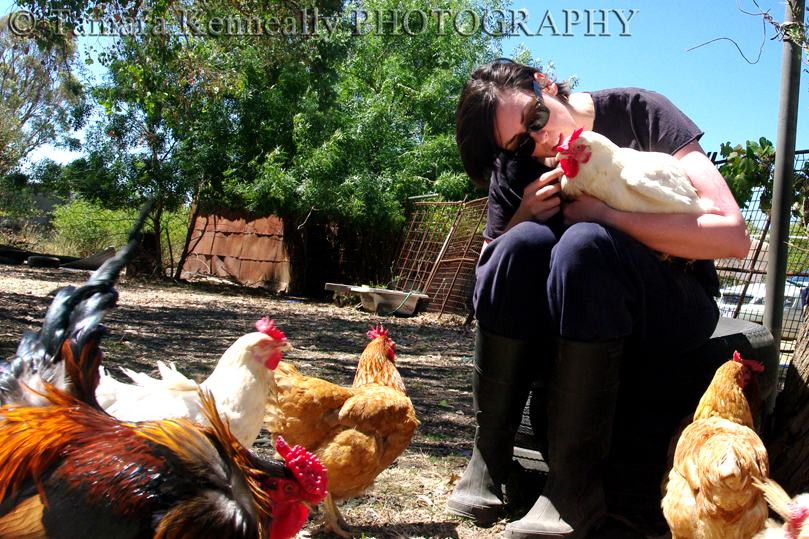
I also have the great joy of being able to care for 4 rescued sheep and 34 rescued chickens. Being with these animals everyday makes me want to share with the world how amazing farm animals they actually are.

Team Earthling: What advice would you give to any photographers/artists out there who want to use their work to help animals?

 Tamara Kenneally: Don’t expect money!! You need to put money aside and make money from some other source to be able to continue to get your work out there and help animals. Stay passionate, it’s easy to give up and be distracted by other things. Try and stay in the loop of the animal rights movement. Read about what’s happening to animals in all areas.

Spend time with animals. This is the single most inspirational aspect to me. Spending time with animals reminds me again and again why I do this and who I’m doing it for. If you don’t have animals, volunteer at a farm sanctuary near you. My favourite farm sanctuary is Edgar’s Mission  in Willowmavin (Kilmore) in Victoria. I have been blessed to be able to spend lots of time there over the years, just me and the animals, and that is when I produce my best work – when it’s just me and the animals.